
BUYING
Dubai Conveyancing Process: Step-by-Step Guide
When you're buying or selling a place in Dubai, there’s a bit more to it than just signing a contract and agreeing on the price. You have to officially transfer ownership through a legal process called conveyancing. A lot of first-timers hear that word and panic, thinking it’s going to be a headache, but it’s actually pretty simple once you see how it works.
In Dubai, everything runs through the Dubai Land Department (DLD). They’re the ones who handle the records, title transfers, and fees. For a sale to be "real" in the eyes of the law, it has to go through their system.
Most people bring in a conveyancer to help out. They’re property pros who manage the paperwork and secure the right approvals so both sides stay protected and everything goes off without a hitch.
Here’s a step-by-step look at how the whole process goes down.
Key Takeaways
- Conveyancing is the legal process that transfers property ownership in Dubai.
- The process begins with the acceptance of the offer and the signing of Form F (Memorandum of Understanding).
- An NOC from the developer is required before the ownership transfer.
- The Dubai Land Department charges a 4% transfer fee.
- The final step takes place at a DLD trustee office, where the new title deed is issued.
What is Conveyancing in Dubai Property?

Conveyancing refers to the legal transfer of property ownership from a seller to a buyer. In Dubai, the process requires contract preparation, verification of property details, developer approval, and registration of the ownership transfer with the Dubai Land Department.
The entire process must follow the rules set by RERA. Once it’s all registered and finalised, the buyer receives their new title deed, and the seller is paid.
A conveyancer acts as a middleman to keep things moving. They check the documents, organise the payments, and walk both sides through exactly what’s needed to make the transfer legal.
The process follows a specific order to make sure the legal transfer is handled correctly.
Step 1: Agreement Between Buyer and Seller
The conveyancing process starts once the buyer and seller agree on a price and the offer is accepted. Usually, a real estate agent writes down the specifics of the deal, covering things like:
- Property price
- Payment structure
- Transfer timeline
- Responsibilities of buyer and seller
These details are the foundation for the official agreement used for Dubai property deals.
At this point, the buyer puts down a 10% deposit on the price. A deposit signals the buyer's serious intent, and the funds are held safely until the transfer is officially completed.
Step 2: Signing the Memorandum of Understanding
The next step is signing the Memorandum of Understanding, which most people call Form F in Dubai. This document is generated right through the Dubai Land Department’s system.
Form F spells out everything both sides have agreed to, such as:
- Buyer and seller information
- Property details
- Final sale price
- Transfer timeline
- Conditions related to the transaction
Both parties sign this in front of the real estate broker handling the sale. Once those signatures are down, the deal is officially legally binding under Dubai’s property laws.
Step 3: Mortgage Approval (If Applicable)
If you're using bank finance, you'll need to get your mortgage officially approved before you can move forward with the transfer. The bank conducts its own property evaluation and buyer eligibility checks.
Banks also appoint a valuation expert to determine the property's market value. Loan approval depends on this valuation.
Buying a home with a mortgage also comes with a few extra bank-related costs you'll need to account for, like:
Bank processing fee: between 0.5% and 1% of the total loan amount.
Property valuation fee: AED 2,500 to AED 3,500
Mortgage registration fee: 0.25% of the total mortgage value + AED 290.
Approval from the bank allows the conveyancing process to continue toward transfer.
Step 4: Applying for the Developer NOC
Every property located inside a developer community requires a No Objection Certificate (NOC) from the developer before ownership can be transferred. Developers use this to double-check that all service charges are paid up, there are no hidden debts on the property, and the transfer is good to go.
The buyer and seller head to the developer’s office for the appointment. You’ll need to bring along documents such as your ID, a copy of the title deed, and the signed Form F. Once everything checks out, the developer issues the certificate.
Just keep in mind that NOC fees vary by project. In most Dubai neighbourhoods, the fee ranges between AED 500 and AED 5,000.
Step 5: Preparing the Transfer Appointment
After you’ve got the NOC, the conveyancer will set up the appointment to officially transfer the ownership. This happens at a trustee's office authorised by the land department. These trustee centres act as official branches that are plugged directly into the Dubai Land Department’s system.
Before the meeting, you’ll need to have the following documents ready:
- Original title deed (Seller)
- Passport or Emirates ID copies (Buyer and Seller)
- Signed Form F (Buyer and Seller)
- Developer NOC (Seller)
- Manager's cheque for the seller (Buyer)
- Manager's cheque for government transfer fees (Buyer)
Payments in Dubai property transfers are normally made through manager's cheques issued by the buyer's bank.
Step 6: Paying the Dubai Land Department Transfer Fee
When you transfer property in Dubai, there’s a government registration fee to settle. The fee is 4% of the property's purchase price, and you'll pay it to the Dubai Land Department right at the transfer appointment.
There are also some extra admin charges to keep in mind, such as:
Trustee office service fee: AED 4,000 (plus VAT) for properties over AED 500,000, or AED 2,000 (plus VAT) for properties below AED 500,000.
Title deed issuance fee: AED 250.
Administrative registration costs: AED 580.
In most cases, the buyer is the one who covers that 4% registration fee, but the final word depends on what both sides agreed to back in Form F.
Step 7: Ownership Transfer and Title Deed Issuance
On the day of the transfer, both sides head to the trustee's office to finalise the transfer. The buyer hands over the payment cheques, and the seller signs the official transfer documents.
The trustee officer then double-checks all the paperwork and logs the transfer into the land department’s system. As soon as that verification is done, the ownership is registered right then and there.
The Dubai Land Department issues a new title deed in the buyer’s name, the seller receives payment, and the property officially changes hands.
How Long Does the Conveyancing Process Take?

How long the conveyancing process takes depends on factors such as mortgage approvals, how quickly you get your paperwork ready, and the developer's processing times.
Cash buyers may complete a property transfer within two to three weeks once Form F is signed.
Mortgage transactions take longer due to bank approvals and valuations. In many cases, the full process may take four to eight weeks.
Keeping your documents organised and ready to go is the best way to make sure everything stays on track and moves as quickly as possible.
Why is Conveyancing Important for Buyers and Sellers?
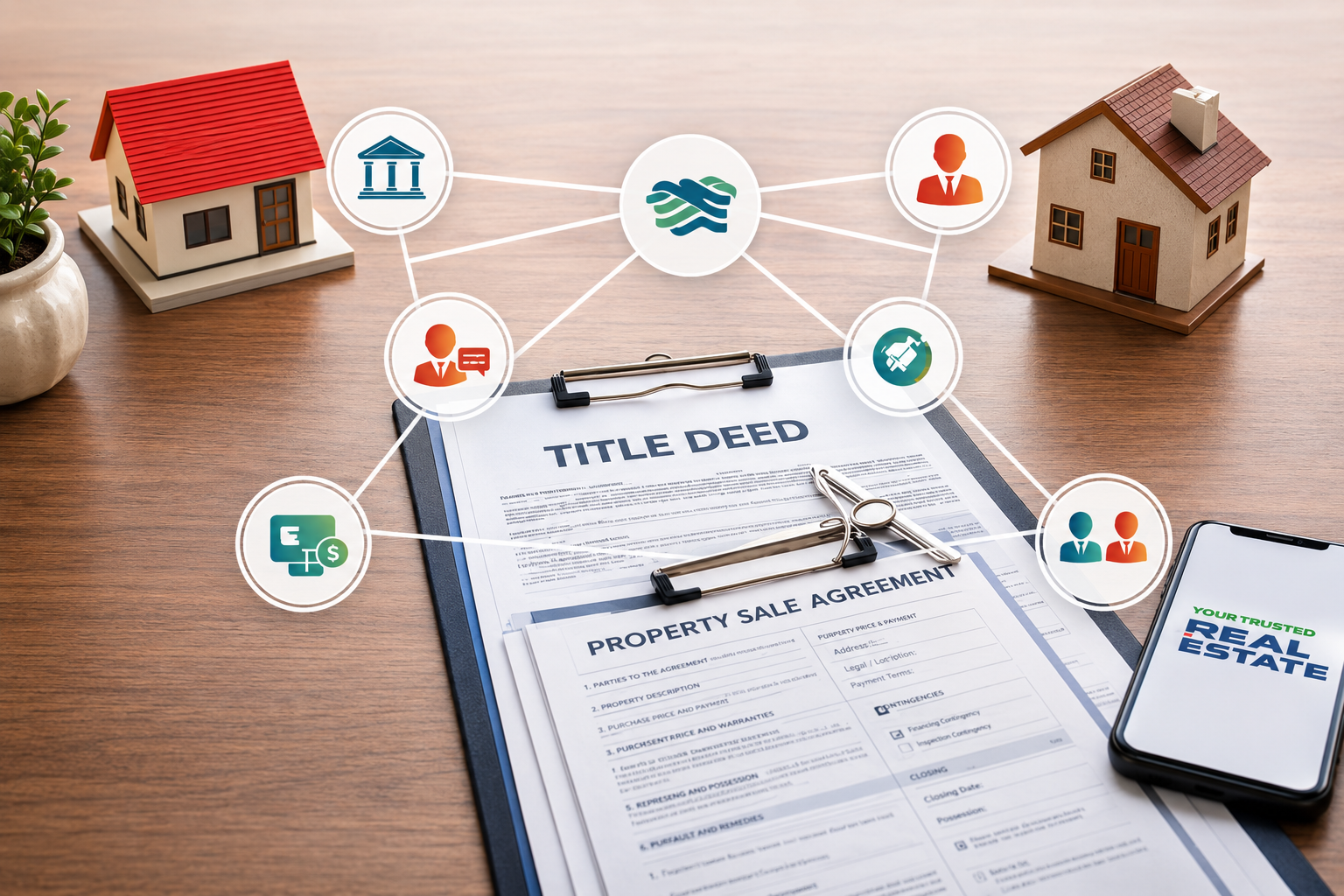
A property sale in Dubai brings together buyers, sellers, banks, developers, and government authorities. Each step of the process is designed to ensure the ownership transfer is legal and to protect both parties from future disputes.
Conveyancing professionals coordinate communication between all parties. They double-check all documents, stay on top of deadlines, and ensure everything is handled through the appropriate government channels.
In the end, the buyer walks away with a secure Title Deed, and the seller receives payment confirmation. It’s a system that helps keep the Dubai property market transparent and trustworthy for everyone involved.
Conclusion
Property ownership in Dubai follows a defined process overseen by the Dubai Land Department and RERA. Conveyancing works as the link between an agreed deal and the moment a buyer receives the official title deed. Buyers progress from offer acceptance through approvals and payments, and sellers handle developer requirements before the final transfer. Every stage is designed to ensure the property changes hands legally and safely, so knowing the drill ahead of time lets you handle your transaction with total peace of mind.
Need help with a property transfer in Dubai? We’ve supported hundreds of clients through the property transfer process with careful guidance at every stage.
Book a free consultation with one of our experts and get your transaction started.