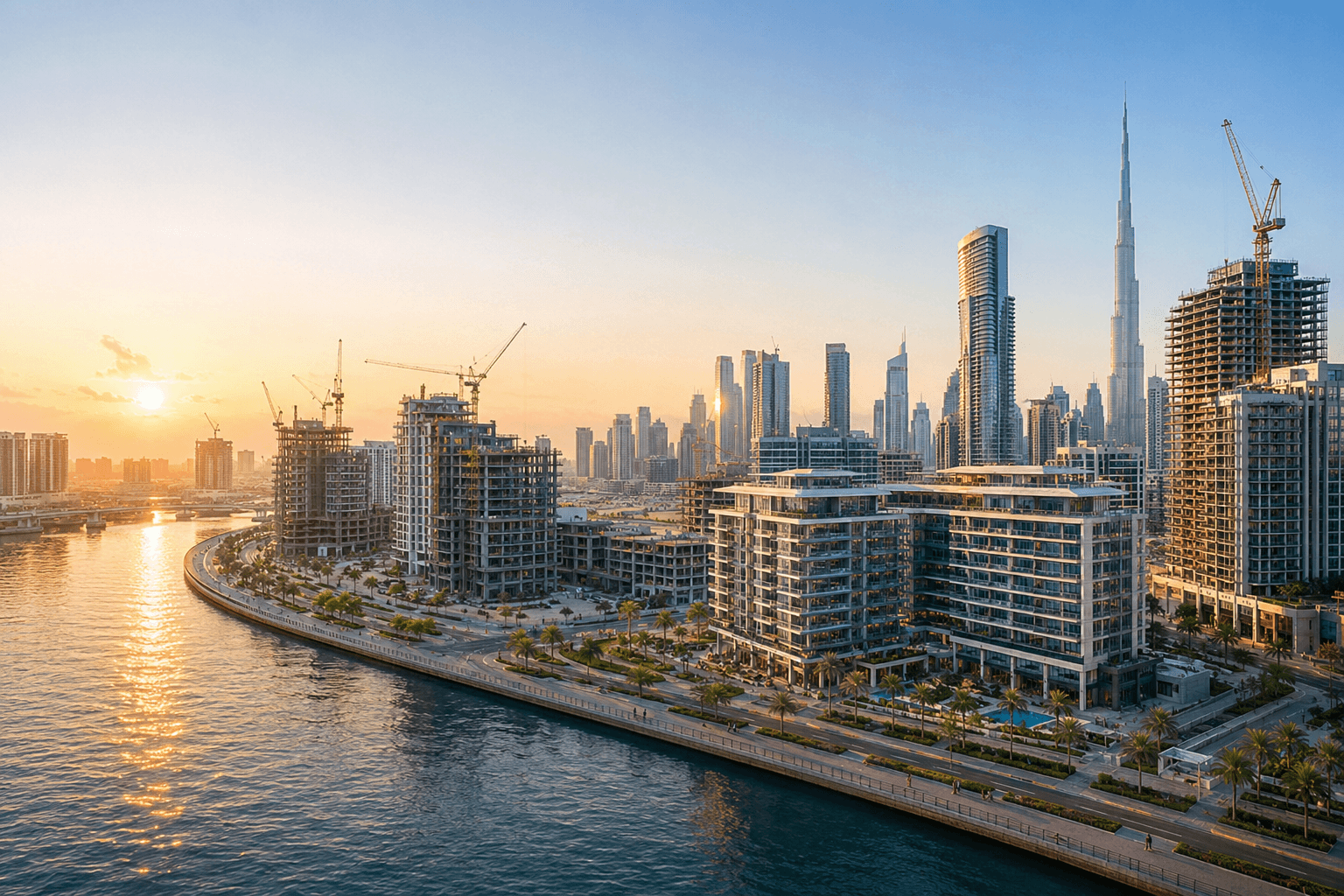
BUYING
Dubai Off-Plan Market Guide for Investors
Dubai’s property market has shifted in a big way over the past few years. One segment now leads almost every report you read, and that is the off-plan market.
Anyone looking to invest in Dubai real estate will come across this concept early in their research. Many buyers step in without fully understanding how it works. Others hold back due to confusion around risks and returns.
The following sections explain how the process works in practice.
At a Glance
- Off-plan property accounted for roughly 65% of total transactions in 2025, the third consecutive year off-plan has led the market.
- Area maturity directly affects rental demand and resale speed.
- Not all projects deliver at the same pace, even within the same community.
- Off-plan investing requires patience before returns become visible.
What Is Off-Plan Property in Dubai?
Off-plan property means buying a home before it is finished. In some cases, construction has not yet started. Developers market these properties through plans, brochures, and show units. Buyers can step in at launch, join during construction, or secure a unit closer to handover.
Timelines vary from one project to another. Some developments are completed within a year, while larger communities can take several years to fully deliver.
Why is Off-Plan Dominating the Market?
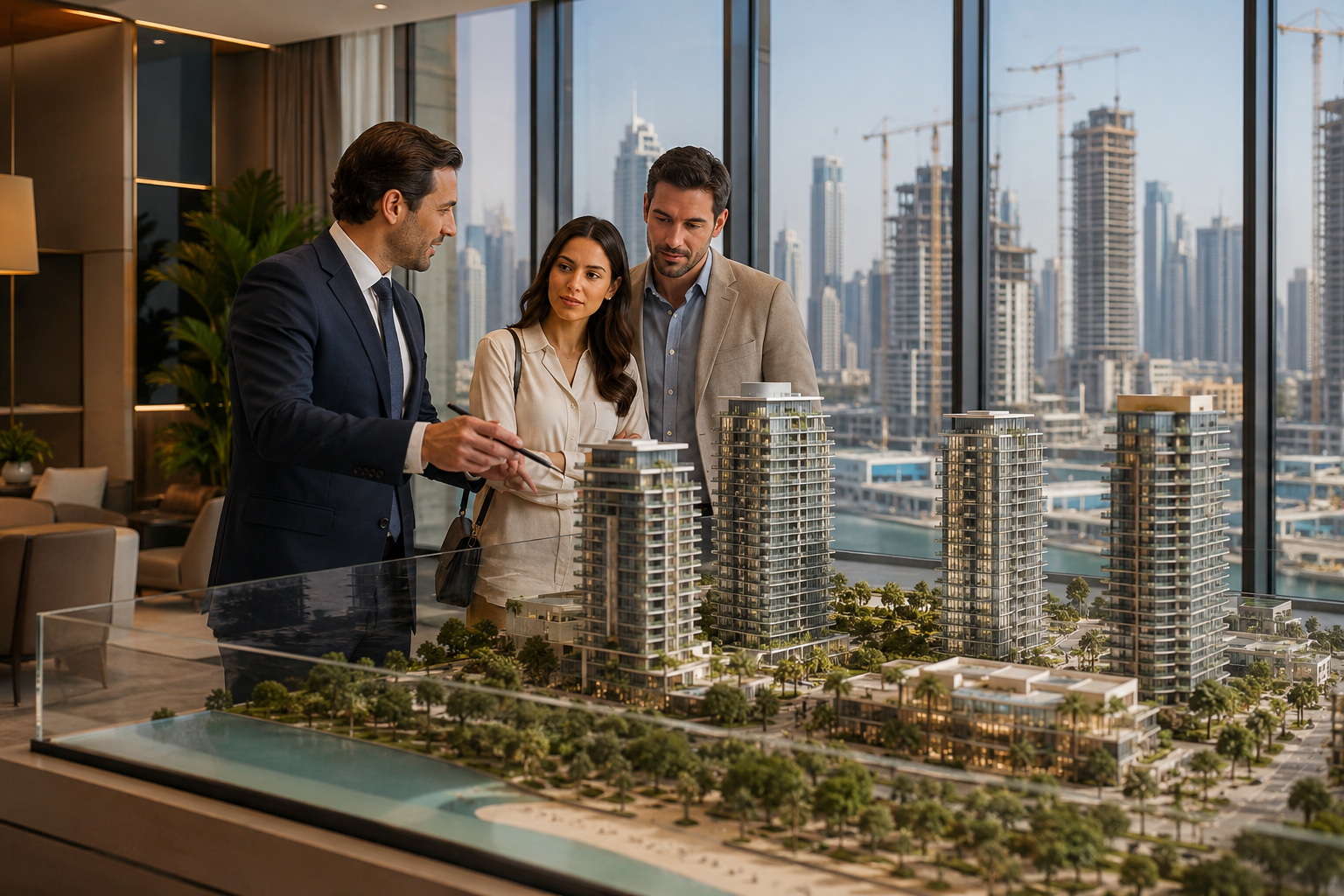
According to Construction Week, off-plan property reached its highest activity levels in 2025, with around 132,000 transactions and AED 286 billion in total value. Sales from these properties accounted for roughly 65% of market volume. Dubai has now seen an off-plan-led market for three consecutive years.
The momentum has carried into 2026. Gulf News reports that in the first quarter alone, Dubai recorded AED 176.7 billion in property sales across nearly 48,000 transactions, with off-plan properties accounting for around 70% of total activity.
There are a few reasons why this part of the market continues to attract attention.
- Lower entry prices compared to ready properties
- Flexible payment plans spread over time
- Potential for price growth before completion
- Wide choice of new projects across different areas
- Policies that support foreign ownership
These factors have pushed demand to a level that has led developers to launch new projects every month.
Legal Framework for Off-Plan Property in Dubai
The legal system in Dubai supports these transactions and gives buyers protection at each stage. Every project must be registered with the government (DLD) before sales begin. Developers cannot market or sell units without approval from the Dubai Land Department, so only verified projects may enter the market.
Law No. 8 of 2007 requires that payments remain in project-specific escrow accounts. Funds are used strictly for the construction of the respective project. Progress remains under close watch, and the developer accesses funds only upon reaching certified milestones.
There are also defined rules in case a buyer fails to meet payment obligations. The developer must notify the Dubai Land Department, and a formal notice period is issued before any further action is taken. In some cases, the developer may terminate the agreement and retain a portion of the property's value, with the remaining amount refunded in accordance with legal guidelines.
How Do Payment Plans Work in Off-Plan Property?
Payment plans are a major reason why buyers choose the off-plan route. A common structure looks like:
- 10% to 20% on booking
- 30% to 50% paid during construction
- Remaining balance on completion or handover
The exact breakdown can vary from one project to another, but the idea remains the same. Payments are spread out to reduce the initial financial burden.
Some developers also offer post-handover payment plans, where a portion of the price is paid after handover. These plans can extend over a few years, and buyers can manage payments even after taking possession.
For buyers considering whether to use a developer payment plan or a bank mortgage, the key difference is cost versus flexibility. Developer payment plans are interest-free during the construction phase, which makes them considerably cheaper in the short term. Bank mortgages carry interest, currently fixed rates of around 4.5% to 5%, but spread repayment over up to 25 years, which significantly reduces the monthly payment after handover. For investors planning to rent the unit immediately, the lower monthly obligation of a long-term mortgage often produces better cash flow than paying off a developer plan in full at handover. For buyers who want to exit through resale before or shortly after handover, the interest-free developer plan is usually the better structure.
Popular Areas for Off-Plan Investment

Different parts of Dubai offer different types of opportunities. Some areas attract buyers seeking steady rental income, while others appeal to investors seeking long-term value growth.
A few locations are drawing the most investor attention across the city:
Jumeirah Village Circle (JVC)
JVC is one of the most active off-plan locations in Dubai. Entry-level apartment prices range from AED 550,000 to AED 1,200,000. The area attracts young professionals and small families, which supports stable occupancy. Gross rental yields range from 7% to 9%. The lower entry point and consistent tenant demand make Jumeirah Village Circle a strong option for income-driven investors. Long-term growth is steady but not aggressive, as supply continues to expand.
Business Bay
Business Bay sits next to Downtown Dubai and operates in a more premium bracket. Apartment prices generally start at around AED 1,000,000 and rise to AED 6,500,000 and beyond for higher-end units. Rental demand is driven by corporate tenants and short-term stays. Yields usually range between 6% and 7%. The area sees strong resale activity due to its central location. The area attracts investors seeking rental income alongside liquidity.
Dubai Creek Harbour
Dubai Creek Harbour is still in a development phase, which shapes its investment profile. Prices for apartments range from AED 1,500,000 to over AED 18,000,000, depending on size, views, and positioning. Rental demand is growing, but still lower than in established districts. Yields usually range from 5% to 6%. The area is tied to long-term infrastructure plans, which support gradual price growth over time. This suits investors with a longer holding period.
Dubai South
Dubai South offers one of the lowest entry points in the market. Apartment prices start from AED 650,000 and go up to around AED 5,000,000. Rental demand is still developing, which keeps yields in the 5% to 6% range in most cases. The area is closely linked to the expansion of Al Maktoum International Airport and the surrounding infrastructure. Investors entering here aim for future growth, with less emphasis on immediate returns.
Dubai Hills Estate
Dubai Hills Estate sits in a more established and higher-priced segment. Apartment prices range from AED 1,000,000 to AED 9,000,000, while villas go significantly higher, between AED 8,000,000 and 50,000,000. Rental demand is stable, driven by families and professionals. Yields across the community range from 5% to 6%. The area benefits from strong planning, green spaces, and proximity to central districts. Investors here prioritise long-term value and stability over yield.
Dubai Islands
Dubai Islands is still emerging, with pricing that varies based on waterfront access. Apartments start at around AED 1,800,000 and increase for premium units. Rental demand is expected to come from short-term and holiday stays. Projected yields range from 7% to 10%, though these are forward-looking estimates based on expected tourism and short-term rental demand rather than established rental history. Actual returns will depend heavily on infrastructure delivery timelines and how quickly the wider tourism and hospitality ecosystem around the islands develops. Investors considering Dubai Islands should treat yield projections as indicative rather than comparable to the established figures available for mature areas.
How Does the Buying Process Work?
The process of buying an off-plan property in Dubai follows a regulated path designed to protect investment. Each step ensures that the legal and financial aspects are handled correctly before the building is finished.
Step 1: Select a unit and pay a booking fee, typically 5% to 10% of the property price. This amount counts toward your total down payment and secures the unit while the paperwork is prepared.
Step 2: Sign the Sales and Purchase Agreement (SPA) to finalise the price, payment schedule, and legal terms. The remaining portion of the down payment, bringing the total to 10% to 20% is paid at this stage.
Step 3: Pay the 4% Dubai Land Department registration fee alongside the SPA. This is due at the point of registering the transaction, not before it.
Step 4: Receive your Oqood certificate, which registers the property in your name during construction and serves as your legal proof of ownership until handover.
Step 5: Monitor the construction progress through official government updates.
The Dubai Land Department provides regular inspection reports and photos so investors can track site work remotely. Such transparency keeps you informed as the project moves toward the finish line.
The final balance is settled upon completion. Once you receive the keys, the Oqood is replaced by a permanent Title Deed.
Plan Your Exit Strategy Before You Invest
Many buyers enter off-plan projects with a clear purchase decision but give less consideration to their exit strategy.
A clear approach leads to better investment outcomes.
- Assess resale demand before completion to understand early exit options
- Review rental potential after handover to estimate income prospects
- Look into community growth plans, such as infrastructure and nearby developments
- Check the upcoming supply in the area to gauge future competition
An exit plan supports better decisions and gives a clearer view of how the investment may perform over time.
Off-Plan vs Ready Property
Whether you go for off-plan or ready property, both options have their place in the market, but they serve different investment needs.
Off-plan property appeals to buyers entering early in a project lifecycle. Ready property suits those who prefer an asset that is already completed and usable.
Off-plan requires a waiting period before handover. Returns depend on price movement during construction and market conditions at completion. Ready property allows immediate use, either for rental income or personal occupancy. Financing structure also differs, with off-plan offering staged payments and ready units relying more on upfront capital or mortgage support.
Here’s a simple comparison:
Factor | Off-Plan Property | Ready Property |
Purchase Stage | Before completion | After completion |
Entry Price | Lower in early stages | Higher market value |
Rental Income | After handover | Immediate |
Inspection | Based on plans | Physical viewing possible |
Risk | Linked to delivery timelines | Lower, asset already built |
Value Potential | Growth during construction | Market-driven appreciation |
Exit Options | May have restrictions before resale | Flexible resale or leasing |
Common Mistakes Investors Make

Investors often enter off-plan transactions without sufficient research, which can affect outcomes later.
Developer Track Record
A developer's reputation is the single most important safety net. Failing to check their past performance can lead to unexpected delays or quality issues.
Delivery History: Check if they have a history of finishing buildings within the promised window. Delays of six months are common, but consistent two-year delays are a red flag.
Build Quality: Visit their finished communities. Look at the lobby maintenance, the quality of the elevators, and the finish of the tiling. Poor quality in old buildings can predict problems in new ones.
Financial Standing: Large, government-backed developers offer the highest security. Private developers should have a visible portfolio of successfully completed work.
Bank Financing Eligibility: Not all developers are approved by UAE banks for off-plan mortgage financing. If financing is part of your plan, confirm that your chosen developer appears on the approved lists of the major lenders before committing.
Total Costs
The purchase price is the primary cost, but several other expenses impact the overall return on investment.
Service Charges: These annual fees for building upkeep range from AED 3 to AED 30 per square foot depending on the development and its amenities. A mid-range apartment building typically sits between AED 8 and AED 15 per square foot, while luxury towers with full facilities can reach AED 25 to AED 30. Always request the estimated service charge rate per square foot before committing.
Administration Fees: Budget for Oqood registration, DLD fees, and handover charges to prevent financial strain during the final stages of the purchase.
Furnishing and Snagging: Unless the unit is sold furnished, budget for fitting it out before it can be rented or occupied. A standard one-bedroom apartment in a mid-range development typically costs AED 15,000 to AED 30,000 to furnish to a rentable standard, while larger or premium units can run significantly higher. On top of this, arrange a professional snagging inspection before accepting handover. Snagging is the process of inspecting a newly completed unit for construction defects before formally accepting handover. Professional snagging companies conduct a thorough room-by-room inspection and produce a report that the developer is legally obliged to address before you sign off on the keys. Skipping this step means inheriting defects that become your responsibility once handover is accepted.
If you are unsure about the setup, read more on whether you should furnish the property before renting.
Timing and Exit
The idea of flipping a property for a quick profit is popular, but it requires a very specific set of market conditions.
Capital Growth Phases: Value tends to increase at two points in a project's lifecycle, around the 50% construction milestone and again at handover. However these gains are not guaranteed. In a flat or softening market, both windows can pass with little price movement. The strength of these phases depends on overall market conditions, the area's demand profile, and the quality of the specific development.
Market Cycles: Real estate does not go up in a straight line. If the market dips when your project is finished, you must be prepared to rent the unit out rather than sell at a loss.
Liquidity: Some areas are easier to sell in than others. Established hubs like Business Bay have more buyers than emerging outskirts, which affects how fast you can get your money back.
Misunderstanding Resale Rules: Most developers require 30% to 40% of the total price to be paid before they allow a resale. Ignoring this limit can trap capital longer than intended.
Professional Guidance
Some buyers assume the process can be simplified by dealing directly with developers. Skipping professional guidance often leads to missed details and limited options.
Limited Market View: A developer only sells their own projects. They will not mention whether a nearby building offers better value or a more flexible payment plan. An agent looks at the entire market and provides a neutral perspective on which project fits a specific budget.
Missing Pre-Launch Access: Top projects in high-demand areas sell out within hours. Agents have direct relationships with developers and get early access to floor plans before the general public. Without an agent, the remaining options might be units that others have already passed on.
Handling the Paperwork: The buying process involves several legal steps and government registrations. An agent manages communication between the developer and the Land Department. This ensures all documents are correct and prevents delays in getting an Oqood or final title deed.
Final Thoughts for Investors
The Dubai off-plan market offers a path to building long-term value, but it requires patience and careful research. Strong outcomes come from understanding how each project is positioned and how it fits within broader market movement. Every choice, from when you enter to how long you hold, should reflect a clear objective. Investors with a clear strategy navigate this segment more effectively.
If you are exploring off-plan opportunities in Dubai, speaking with an advisor can help you compare projects, payment plans, and developer track records more clearly.