BUYING
Freehold vs Leasehold Property in Dubai
Many people searching for homes in Dubai share the same thought. Do I truly own this place, or am I just paying to use it for a long time? It is not something everyone talks about at the start, yet it shapes every decision that follows, from how much to spend to how long to plan.
Freehold and leasehold are not just legal labels on a contract. They decide how much freedom you have, how long the home stays in your hands, and how easy it is to change direction later. Someone hoping to settle here looks at ownership very differently from someone who sees Dubai as a chapter. That is why getting clear on these two types of ownership matters so much. Once you understand what freehold and leasehold mean in Dubai, every other decision starts to make a lot more sense.
So let’s walk through how each one works and what it offers for anyone considering calling this place home.
What is a Freehold Property in Dubai?
A freehold property is a home where the buyer owns the unit and the land it sits on in their own name, with no time limit attached to that ownership. The Dubai Land Department issues the title deed, so your name sits on the official record as the owner. That gives you the freedom to sell the place, pass it to family, or hold on to it for years without worrying about losing it to the passage of time.
Foreign buyers are allowed to own freehold property, though only in certain parts of the city. These areas opened to international ownership back in 2002 and now cover most of Dubai’s well-known communities, including:
- Dubai Marina
- Downtown Dubai
- Palm Jumeirah
- Jumeirah Village Circle
- Business Bay
- Dubai Hills Estate
- Dubai Creek Harbour
In these zones, expats hold the same property rights as UAE nationals. That also explains why banks are more comfortable with freehold homes.
What is a Leasehold Property in Dubai?
A leasehold works more like a long-term contract to use a home, even though many people think of it as ownership. The buyer gets the right to live in the property for a set number of years. In Dubai, that period falls somewhere between 10, 30, 50, and 99 years. Any lease agreement lasting longer than 10 years must be registered with the Dubai Land Department (DLD) to ensure legal protection and transparency.
The land and the building still belong to the original owner, called the freeholder. The leaseholder pays for the right to use the home. Once the lease expires, the property reverts to the landowner unless both parties agree to extend the term.
A few of Dubai’s older neighbourhoods fall under leasehold rules, including:
- Deira
- Bur Dubai
- Jumeirah
- Al Garhoud
Many of these areas were developed before freehold ownership was introduced, which is why the structure feels different from newer communities.
Freehold vs Leasehold Property in Dubai
Area | Freehold | Leasehold |
Who owns the land | The buyer owns the apartment or villa and the land share beneath it | The land stays with the original owner |
Time limit | No time limit on ownership | Ownership rights expire after the lease period |
What happens at the end | Property stays with the owner until sold or transferred | Property goes back to the land owner unless renewed |
Passing to the family | Can be passed to spouse or children without any time limit | Only passes on if the lease still has years left |
Who it fits best | Buyers planning long-term living, investment, or residency | Buyers who know their time in Dubai is limited |
Mortgage availability | Most banks finance these homes | Few banks accept them, with stricter terms |
Buyer demand | Appeals to end users and investors | Appeals mostly to people planning to live there for a fixed time |
Price pattern | Prices reflect permanent ownership | Prices drop as lease years run down |
Long-term planning | Works for building wealth and security | Works for lifestyle use over a defined period |
The table above gives a quick snapshot of how freehold and leasehold differ on paper. The real impact shows up in everyday decisions, like how much control you have, whether banks will lend, or what happens when you want to sell or stay long term.
The sections below break down what those differences actually mean once you start living in the property.
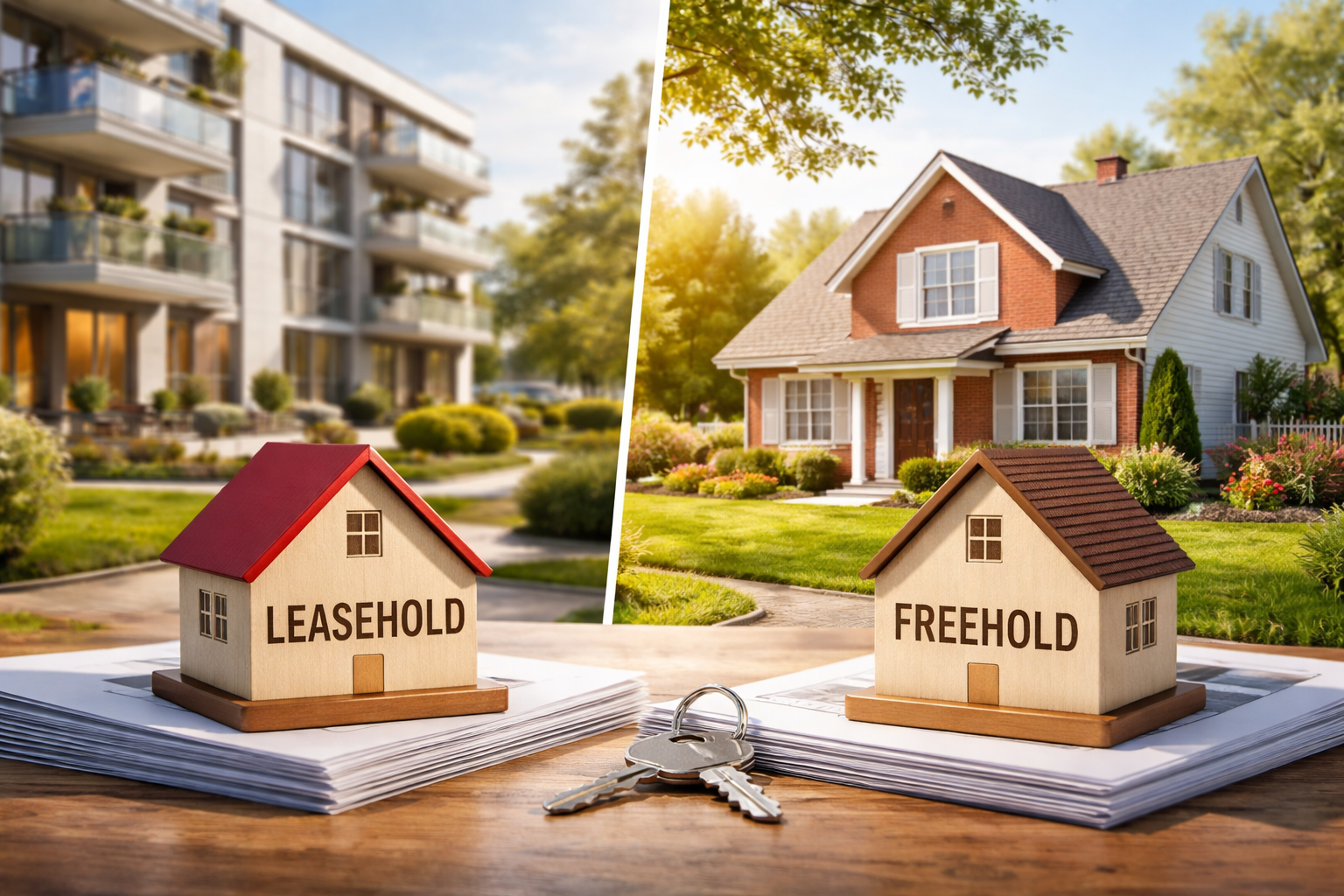
How Control Differs
Freehold
The home belongs to you in every real sense. Your name stays on the title deed until you choose to sell or pass it on. You can rent it out, live in it, or update the space as long as you follow the building and community rules. No one else decides how long you get to keep it.
Leasehold
The lease sets the limits. Some contracts let you rent the home out. Some places have tight controls on changes. Larger upgrades require the landowner’s approval, and even a sale can involve extra steps. Time never fades into the background here, since the years on the lease keep counting down.
Visa and Residency Impact
Freehold
Freehold links directly to residency. A registered freehold property worth at least AED 2 million allows the owner to apply for a ten-year Golden Visa. The home can be off-plan or completed, as long as it is freehold and in the buyer’s name.
Leasehold
Leasehold does not support property-based visas. Even if the value is high, a Golden Visa cannot be issued because the land does not belong to the buyer.
Financing and Mortgages
Freehold
Banks in the UAE feel more comfortable with freehold homes. Most home loans are written for properties that come with permanent ownership, so buyers have more choices and longer repayment terms.
Leasehold
Leasehold properties get less attention from lenders. Some banks do offer loans, though the terms are shorter and the rates are usually higher. As the remaining lease years drop, financing becomes harder to secure.
Resale and Value Over Time
Freehold
Freehold homes hold their value better because there is no expiry date tied to ownership. Buyers know the property stays in their name for as long as they want it.
Leasehold
Leasehold homes change in value as the lease shortens. A property with many decades left feels easy to sell. One with only a few decades left makes buyers cautious, which narrows the pool of people willing to make an offer.
Which One Fits You
Freehold suits people who see Dubai as more than just a stopover. Families, investors, Golden Visa buyers, and anyone who wants room to plan feel more at ease with this type of ownership.
Leasehold works better for people drawn to a lower price in a central location and who already have a clear idea of how long they plan to live there. When the timeline is known, it can be a practical choice.
Trouble starts when the leasehold gets treated like full ownership. That gap between expectation and reality is where most of the confusion comes from.
Final Thoughts
Looking at the price and layout makes the property feel easy to afford. The part that shapes everything later is ownership. Freehold gives you something that stays with you and grows in value over time. A leasehold provides you with a place to live for a defined period of time. Both work in Dubai, though the choice comes down to how long you plan to be here and what you want the home to do for you. When that feels clear, the decision stops feeling complicated.
We at Linda’s work with freehold and leasehold homes and can walk you through areas, prices, and ownership types based on how you plan to live or invest. Contact us today to discuss your options and find the best fit for your situation.