
BUYING
Mortgage Options for Expats in the UAE | Types, Rates & Eligibility
Buying property in the UAE has become a serious goal for many expats. Renting feels convenient at first, but after a few years of paying rent, the thought of buying a home eventually appears. Since Dubai and Abu Dhabi allow freehold ownership in many areas, expats can legally own property and also take mortgages from local banks. But how does mortgage financing work for expats? What are the types? Who qualifies?
Mortgage financing in the UAE can feel technical, yet once broken down, the structure makes sense. The UAE property market attracts expats from every corner of the world, and banks have created lending options tailored to people who earn and bank outside the country.
A clear understanding of mortgage types helps narrow down choices quickly before applying for pre-approval.
How Mortgages Work for Expats in the UAE

Banks in the UAE lend money for ready properties and off-plan projects. Expats can borrow up to 80% of the property's value, subject to price and eligibility criteria. The UAE Central Bank has defined standard rules:
Category | Maximum Loan-to-Value (LTV) for Expats |
Properties priced AED 5M and below | Up to 80%, expat down payment minimum 20% |
Properties priced above AED 5M | Up to 70%, expat down payment minimum 30% |
Second mortgage/investment property | Up to 60% of the value |
Banks also look at income stability. Most institutions require a minimum monthly income of AED 10,000-15,000 for salaried expats, along with 6 months of bank statements. Self-employed expats may need to show two years of business financials and maintain a minimum average balance. The total monthly mortgage payment cannot exceed 50% of the borrower's monthly income, as defined by the Debt-to-Income Ratio (DTI).
Mortgage types fall into different categories, mainly based on the interest rate structure and repayment terms.
Fixed-Rate Mortgage
Fixed-rate mortgages lock in the interest rate for a specific period. Most banks offer fixed periods ranging from 1 to 5 years. Once locked, the rate remains unchanged until the fixed period ends. Property buyers prefer this because it helps them plan monthly costs without worrying about market fluctuations.
People usually lean toward a fixed-rate mortgage when:
- They want predictable monthly payments
- They expect interest rates to rise.
- They prefer stability at the start of their loan journey.
The challenge surfaces when the fixed term ends. Mortgage rates shift to a variable structure linked to EIBOR (Emirates Interbank Offered Rate). If the market rates climb later, payments increase.
Variable-Rate Mortgage
Variable-rate mortgages are linked to a benchmark, such as EIBOR plus a bank's margin. Rates fluctuate during the mortgage tenure depending on economic conditions. UAE banks update variable rates every three or six months.
Example:
EIBOR at 3% + bank margin at 1.25% = 4.25% variable rate
When EIBOR decreases, the monthly payment automatically goes down. Many expats watch market trends and use this type when they believe rates may soften in the short term. Banks usually set caps to prevent payments from spiking uncontrollably, though not all banks guarantee this.
Discounted Variable-Rate Mortgage
Banks design a variable-rate product that includes a temporary discount during the initial period. It acts like a short-term relief plan. For the first year, the bank reduces the margin by 0.5%. After the first year, the margin returns to the standard rate. This type works well for buyers who plan to increase earnings in the future or to receive rental income once the unit is leased.
Offset Mortgage
Offset mortgages appear attractive to expats who maintain a strong savings balance. A linked savings account is attached to the mortgage, and interest or profit is charged only on the difference between:
- The outstanding mortgage amount
- The balance in the linked account
Example:
If a person owes AED 1,000,000 on the mortgage but keeps AED 200,000 in the linked account, interest applies only on AED 800,000.
A setup like this gives two advantages:
- Reduces the loan cost without locking savings
- Helps repay the loan faster
Offset mortgages are not offered by all banks. The ones that do usually require a higher minimum balance.
Islamic Mortgage (Sharia-compliant)
Islamic banks in the UAE provide mortgage financing under structures such as Ijara and Murabaha. Interest is not charged because Sharia law prohibits charging interest. Instead, banks follow trade-based or leasing structures.
Ijara model (leasing model):
The bank buys the property and leases it to the borrower. Payments are fixed for a period and then reviewed.
Murabaha model (cost-plus model):
The bank buys the property and sells it to the borrower at a higher price, with payments due over time.
Expats who prefer interest-free financing usually choose Islamic mortgages. Islamic banking in the UAE is regulated and operates under the Central Bank, so that borrowers can expect the same level of security and competitive pricing as conventional banks.
Remortgaging (Refinance Mortgage)
Expats can switch their mortgage to another bank to secure better rates or adjust their loan term. Many borrowers remortgage after the fixed period ends because variable rates sometimes jump.
Reasons people consider refinancing:
- Lower interest rates are available at another bank
- Reduced monthly payments after extending the loan term
- Borrowing additional funds against property equity
Before switching banks, check exit or processing fees. The UAE Central Bank caps mortgage exit fees at 1% of the outstanding loan, up to AED 10,000.
Eligibility Checklist for Expats
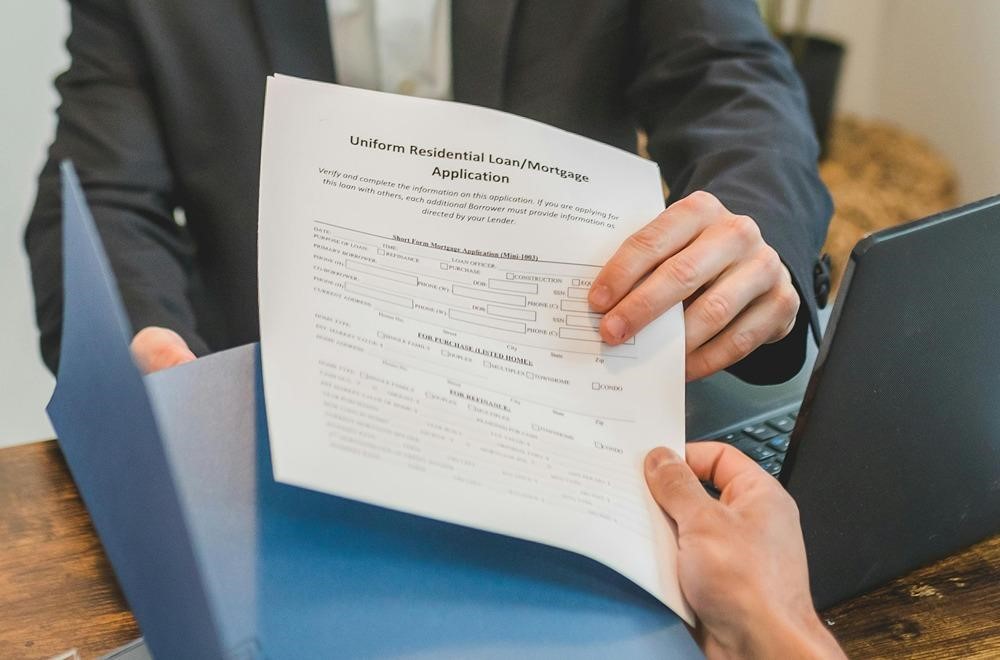
Banks evaluate mortgage applications using a standard checklist. Most institutions require:
- Passport copy and UAE visa
- Emirates ID (if currently residing in the UAE)
- Salary certificate or trade license (for self-employed)
- Bank statements (usually 6 months for salaried, 12 months for business owners)
- Credit report (AECB credit report)
Which Mortgage Type Fits Which Buyer?
Different personalities lean toward different mortgage styles.
- People who prefer stability choose fixed-rate mortgages.
- Buyers who want to take advantage of lower interest rates tend to choose variable-rate mortgages.
- Investors with substantial savings on hand explore offset mortgages to reduce total costs.
- Expats preferring interest-free financing consider Islamic mortgage structures.
- Homeowners unhappy with their current rate look into refinancing.
Quick Comparison Table
Mortgage Type | Stability | Risk Level | Suitable For |
Fixed-Rate | Predictable payments | Low | Buyers wanting stability |
Variable-Rate | Flexible but fluctuates | Medium to High | Buyers willing to track the market |
Discounted Variable | Lower payments initially | Medium | Buyers expecting future cash flow |
Offset Mortgage | Saves money on interest | Low to Medium | Buyers with strong savings |
Islamic Mortgage | Interest-free structure | Low | Buyers preferring Sharia-compliant financing |
Remortgaging | Can reduce rates | Low to Medium | Buyers looking to switch banks |
Conclusion
Buying property in the UAE through a mortgage is not complicated once the basics are clear. Every mortgage type solves a different problem. Some people need predictability, others want flexibility, while a few are optimising for long-term savings. The most innovative approach is to match the mortgage structure with personal financial habits. Mortgage financing should feel comfortable, not stressful. The right type keeps long-term goals intact without compromising day-to-day living.
A mortgage becomes easier to handle when someone experienced breaks it down into clear steps. Linda's Real Estate helps expats understand what fits their budget and shortlists properties that align with long-term goals.
Contact us and let's start with a quick pre-approval check.