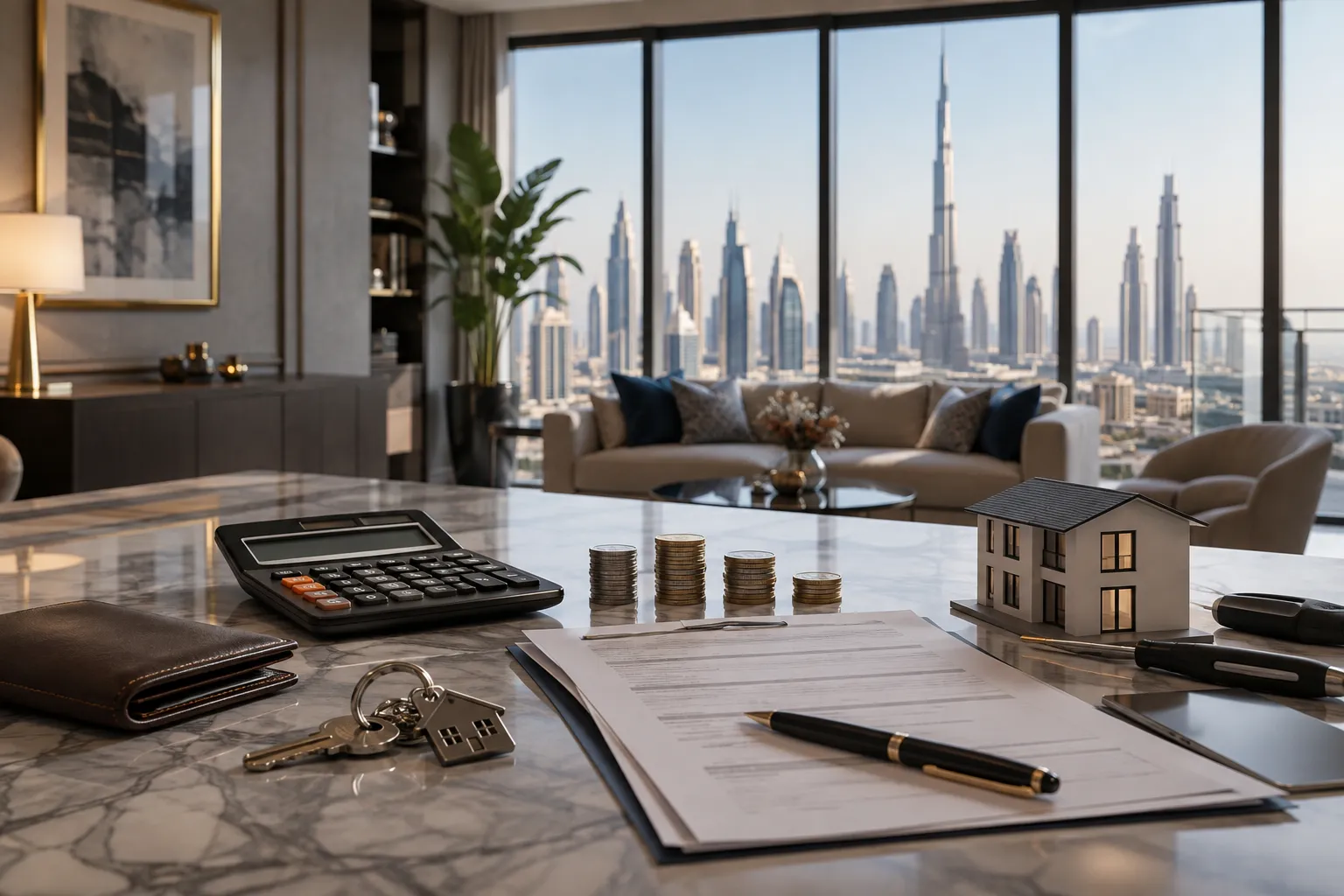
BUYING
Real Estate Jargon Expats Should Know in Dubai
Moving to Dubai or Abu Dhabi brings many new experiences, and the property market is a big part of that journey. Rental contracts, sales documents, and payment plans include terms many people hear for the first time. A simple apartment viewing can suddenly turn confusing once an agent starts talking about escrow accounts, title deeds, Oqood, or service charges. Most people end up searching these words on their phones after a meeting because the terms sound technical at first.
A good understanding of these terms helps with following rental discussions and knowing exactly what an owner or tenant is responsible for. It makes asking questions during meetings feel more natural.
Here are some of the most common real estate terms expats should know before renting or buying property in the UAE.
Key Takeaways
- Ejari registration is necessary before setting up utilities and several visa-related services in Dubai.
- Freehold properties give expats permanent ownership rights in designated Dubai communities.
- Off-plan buyers receive Oqood registration before getting the final title deed.
- Escrow accounts protect buyer payments during off-plan construction stages.
- NOC approval is required before resale property transfers can happen.
DLD and RERA
Before looking at houses, people need to know who runs the show. In Dubai, the Dubai Land Department (DLD) oversees all aspects of real estate. They handle sales registration and provide data showing what homes actually sold for. Buying a property requires paying a DLD fee of 4% of the purchase price.
Under the DLD sits RERA, the Real Estate Regulatory Agency. They act as the referee by setting the rules for brokers and developers. They even decide how much a landlord can increase rent. If a dispute with a landlord happens, RERA is the agency that steps in to help. Knowing these two names is the first step toward a safe transaction.
Freehold Property: Full Ownership Rights for Expats

Going with a freehold property gives an owner total control. These rights allow them to sell the home, lease it to tenants, or pass it on to family members through inheritance. Many people moving from abroad hunt for these neighbourhoods because the ownership lasts forever. Areas like Dubai Marina, Downtown Dubai, Palm Jumeirah, and Jumeirah Village Circle (JVC) fall into this category.
Leasehold Property: Long-Term Use Without Land Ownership
Leasehold operates under a different set of rules. The setup grants the right to live in a home for a specific period, such as 30, 50, or 99 years. The land stays with the original developer. These homes sometimes carry a smaller price tag, which appeals to buyers with specific budget targets. However, the rights to the property end once that period ends.
Freehold vs Leasehold Property in Dubai
Feature | Freehold | Leasehold |
Ownership Period | Permanent | Limited years |
Land Ownership | Buyer | Original owner |
Resale Rights | Yes | Yes, within lease terms |
Inheritance Rights | Yes | Depends on agreement |
Popular Among Expats | Very common | Less common |
Off-Plan Property
Many expats hear the term off-plan during developer launches. Off-plan property refers to buying a home before construction is complete. Developers sell units during early construction stages and offer payment plans spread across several years. Buyers normally pay an initial booking amount followed by scheduled instalments linked to construction milestones.
Areas like Business Bay, Jumeirah Village Circle (JVC), and Dubai Hills Estate regularly see new off-plan launches as developers regularly introduce residential towers and villa communities there.
Ready Property
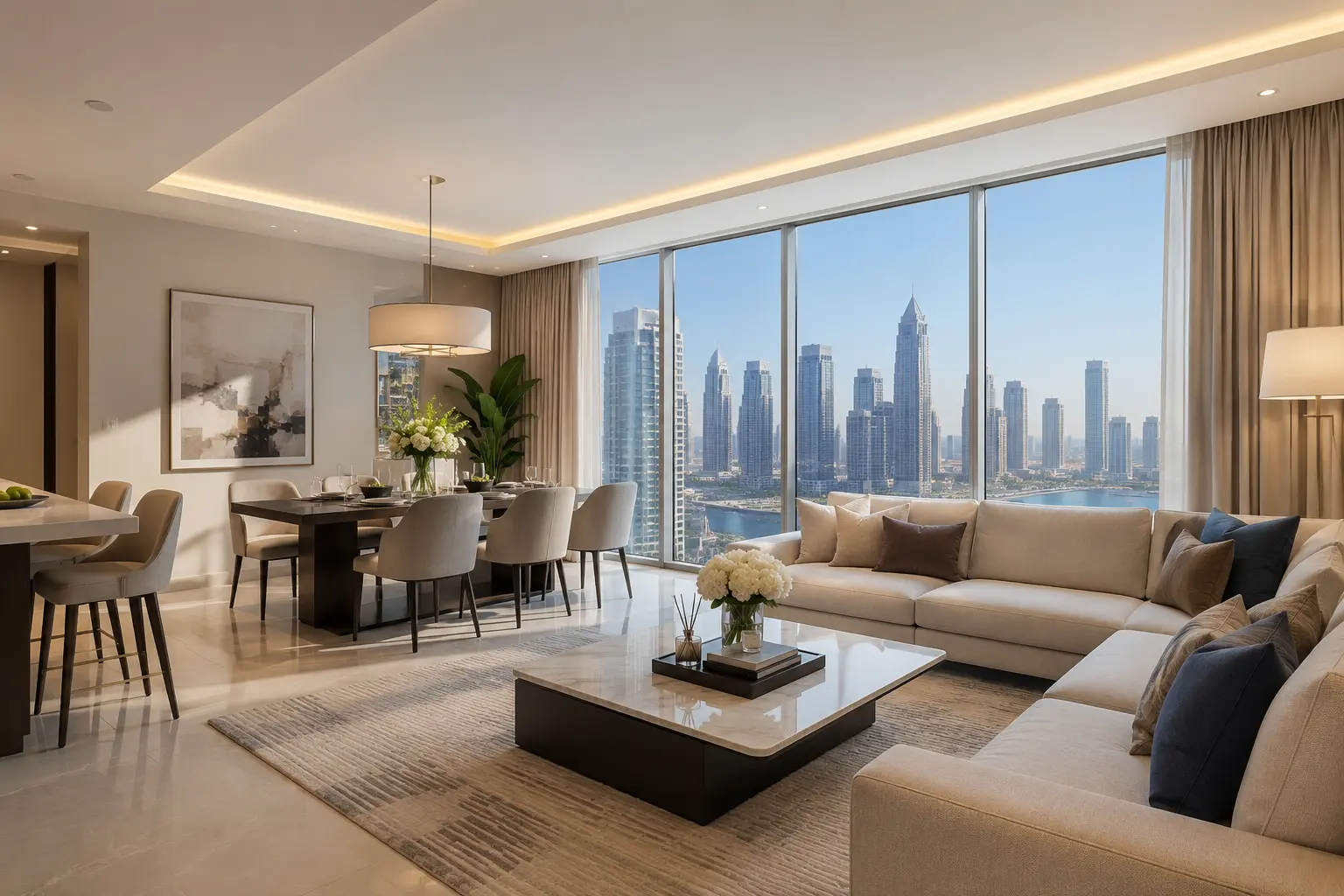
Ready property refers to completed homes available for immediate move-in or rental use. Many expats prefer ready apartments because they can inspect the unit in person before making a payment. The building facilities, finishing quality, parking areas, and community surroundings are already visible.
Investors also like ready properties because rental income can start immediately after purchase.
Off-Plan vs Ready Property Comparison
Feature | Off Plan | Ready Property |
Construction Status | Under construction | Completed |
Payment Structure | Installments | Full payment or mortgage |
Move In Time | After handover | Immediate |
Inspection Before Purchase | No full inspection | Yes |
Rental Income | After completion | Immediate |
Title Deed: Proof of Legal Property Ownership
A title deed is one of the most important documents in the UAE property market. The document proves legal ownership of a property and contains details about the owner, unit number, property size, and location.
Many expats first hear about title deeds during the buying stage, when agents or banks ask for ownership records. In Dubai, the Dubai Land Department issues title deeds upon completion of the ownership transfer process. Banks also request title deeds during the financing process because the document confirms that the property legally belongs to the seller. A missing or incorrect title deed can delay transactions for weeks.
Oqood: Temporary Registration for Off-Plan Buyers
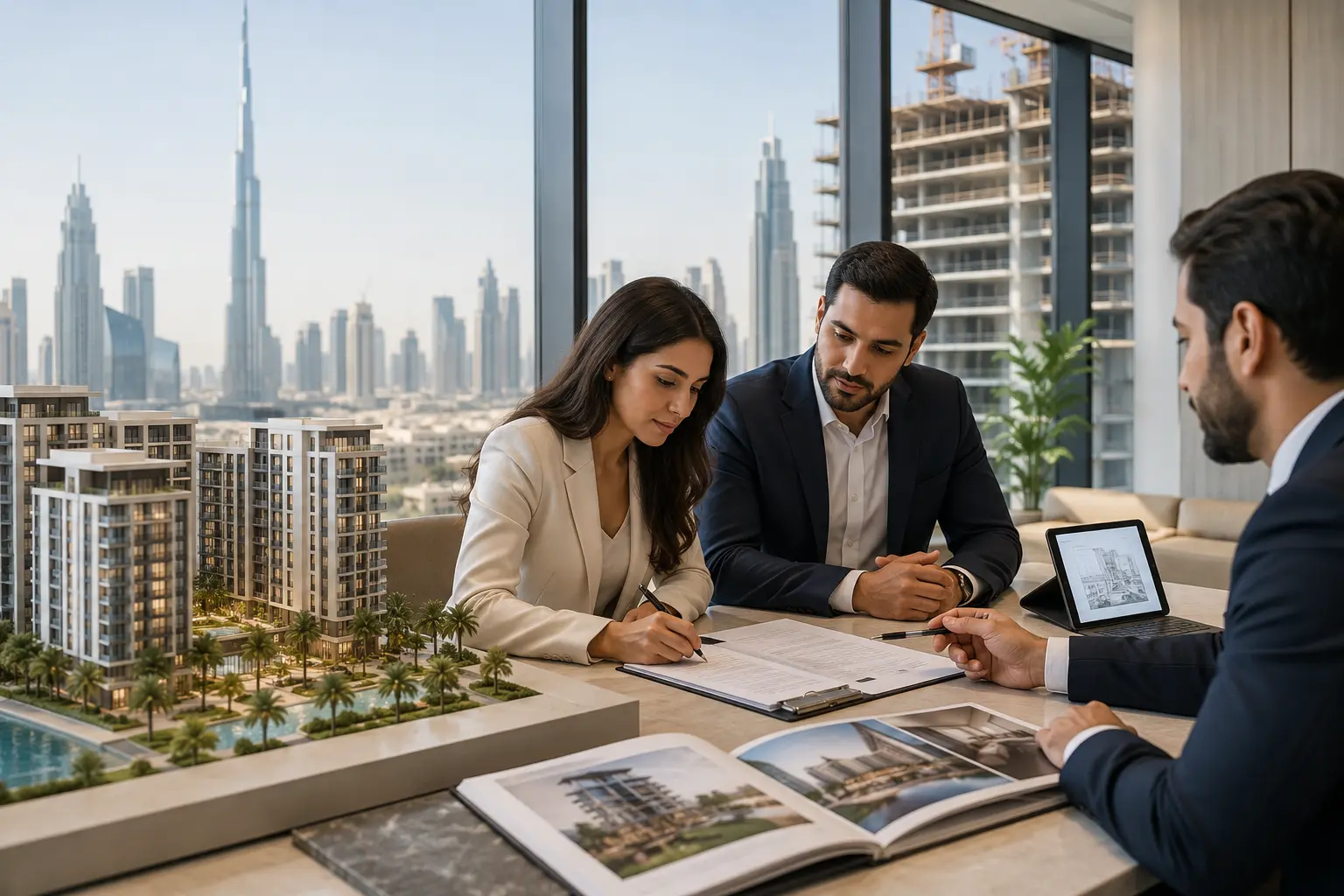
Oqood is an official registration system used for off-plan properties in Dubai. Many expats hear the word during paperwork discussions and assume it is another service charge or hidden fee. In reality, since the project is not yet complete, buyers do not receive the final title deed immediately. Oqood serves as temporary ownership registration until construction is complete.
Ejari: Official Rental Contract Registration in Dubai
Anyone renting an apartment or villa hears the word “Ejari” within days of signing a lease. The name comes from the Arabic word for "my rent," and it refers to the official system for registering rental agreements in Dubai.
Many basic services depend on it, such as:
- Internet service providers may request the Ejari certificate before activation.
- Utility providers request it during account setup.
- Family visa sponsorship applications may also require Ejari.
Tenants sometimes think the signed tenancy contract alone is enough, only to discover later that certain services cannot proceed without Ejari registration.
Form F: Sale Agreement Between Buyer and Seller
Form F is one of the most important documents during property sales in Dubai. The form is officially called the Memorandum of Understanding, though agents and brokers refer to it simply as Form F.
The document outlines the agreement between the buyer and seller prior to the transfer of ownership.
Once both parties sign the form, the deal becomes legally binding. The document records:
- Agreed property price
- Payment structure
- Timelines
- Transaction conditions
Form A: Seller and Broker Listing Agreement
Before a property can be listed for sale, the seller signs Form A with their chosen broker. This document gives the broker official authority to market the property and represent the seller in negotiations. Without a signed Form A, a broker has no legitimate basis to claim a commission if the property sells. Buyers occasionally encounter Form A indirectly when verifying that the agent showing them a property is the one officially authorised to sell it.
Service Charges: Annual Maintenance Costs for Owners

Service charges are yearly maintenance fees paid by property owners. First-time buyers sometimes pay attention to the apartment price but forget to ask about these ongoing costs. The fees cover the maintenance and operation of shared spaces inside the building or community. Security staff salaries, lobby cleaning, landscaping, elevator servicing, parking maintenance, and gym upkeep all fall under service charges.
Buildings with luxury amenities usually have higher annual charges. A tower with valet parking, multiple swimming pools, private lounges, and large gym areas will naturally cost more to maintain.
Mortgage: Bank Financing for UAE Property Buyers
A mortgage is a bank loan used for buying property. Many expats purchase homes in the UAE through mortgages. Most people moving from abroad look into this option to avoid paying the full price upfront. Banks look at a long list of details before approving a loan.
To qualify for a mortgage in the UAE, applicants are generally required to be between 21 and 65 years old at the time of application, extending to 70 for the self-employed at the point the loan matures.
What Banks Evaluate
- Income Stability: Lenders check how long a person has worked at a current company.
- Credit Score: A clean history of paying off credit card and loan balances.
- Debt-to-Burden Ratio: This measures how much of a monthly salary is allocated to paying off existing debts. UAE Central Bank regulations cap total monthly debt obligations, including the new mortgage payment, at 50% of gross monthly income. This cap applies regardless of how much a buyer is approved to borrow based on property value.
- Property Value: The bank sends an expert to make sure the house is worth the asking price.
Commonly Required Documents
- Salary Certificate: An official letter from the employer stating the monthly income and position.
- Bank Statements: Usually, the last six months of transactions to show savings and spending habits.
- Liability Letter: A document from other banks showing any existing loans or credit card limits.
- Passport and Visa: Proof of residency is required to obtain local financing.
Approval does not happen instantly either. Banks conduct background checks and property reviews before providing final confirmation.
Down Payment: The Upfront Amount Buyers Must Pay
The down payment is the upfront amount paid directly by the buyer before bank financing begins.
Banks in the UAE finance only part of the property's value, meaning buyers must contribute the remainder themselves. For expats, this is typically 20% on properties up to AED 5 million, rising to 30% above that threshold. A second or investment property requires a higher contribution of around 40%. Expats buying property should prepare for this amount early, as it constitutes a major part of the transaction costs.
Escrow Account: Protected Payments for Off-Plan Projects
The term “escrow account” sounds technical, but the idea behind it is simple. Buyer money does not go directly into the developer’s personal business account. Payments must be deposited into a regulated escrow account approved by the authorities.
The system exists to protect buyers during construction stages. Developers receive funds gradually based on construction progress, rather than receiving unrestricted access to the full amount immediately.
Here is an example of how payment stages may look for an AED 1.5 million off-plan apartment:
Construction Stage | Payment Percentage | Payment Amount |
Booking stage | 10% | AED 150,000 |
After 6 months | 10% | AED 150,000 |
20% construction completion | 10% | AED 150,000 |
40% construction completion | 10% | AED 150,000 |
60% construction completion | 10% | AED 150,000 |
Handover stage | 50% | AED 750,000 |
Expats purchasing off-plan homes feel reassured once they understand how the system works. Buyers should still verify the project registration details before making payments.
NOC: Developer Approval Before Property Transfer
NOC stands for No Objection Certificate, and it is important during property resale transactions in Dubai. The developer issues the NOC to confirm there are no pending issues connected to the property. Without it, the ownership transfer cannot proceed with the Dubai Land Department.
NOC fees vary by developer. In many Dubai communities, the amount ranges between AED 500 and AED 5,000. Sellers commonly pay the fee, though both parties may agree on different arrangements during negotiations.
DEWA: Electricity and Water Setup in Dubai
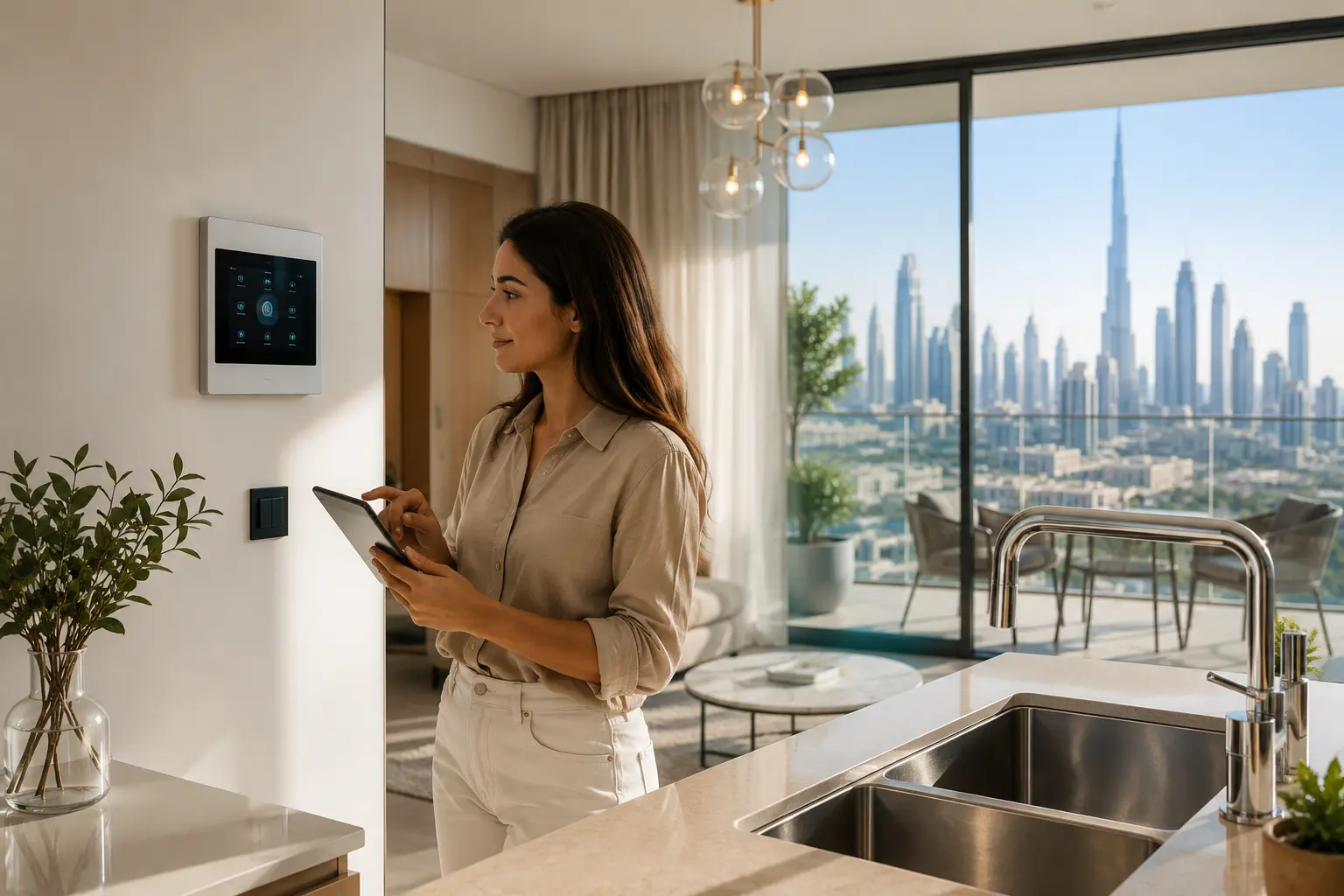
DEWA stands for Dubai Electricity and Water Authority. Every tenant or homeowner in Dubai deals with DEWA shortly after moving into a property. The authority manages electricity and water services across the city. After signing a tenancy contract, tenants must activate their accounts separately before utilities begin service.
Activating a new account requires a refundable security deposit, typically AED 2,000 for apartments and AED 4,000 for villas, paid back when the account is closed.
Chiller-Free vs District Cooling: Cooling Costs Tenants Should Check
This term comes up in almost every Dubai rental listing and confuses many new tenants. "Chiller-free" means the landlord covers the cost of air conditioning, and it's already built into the rent. If a property is not chiller-free, a separate district cooling company, most commonly Empower or Emicool, bills the tenant directly for cooling. Always confirm this detail before signing a tenancy contract, since it has a significant impact on the real monthly cost of a property.
Valuation: How Banks Confirm Property Market Value
Banks arrange a valuation before approving a mortgage. The valuation determines the property's estimated market value. Licensed professionals inspect the apartment or villa and study factors such as location, building condition, recent sales, and community demand. The final report helps the bank decide how much money to lend.
Problems sometimes arise when the valuation comes in below the agreed purchase price. A buyer may agree to buy an apartment for AED 1.5 million, but the valuation might place the market value at a lower amount. In that case, the buyer may need additional cash to cover the gap.
There are instances where expats hear about valuations only after reaching advanced stages of the purchase process, which catch them off guard.
Return on Investment (ROI): Measuring Rental Income Potential
Investors use the term ROI to measure how much rental income a property generates compared to its purchase cost. Areas near metro stations, business districts, and tourist attractions attract investors seeking higher rental returns. Short-term rental demand also affects ROI in many Dubai communities.
The calculation is not only about rental income. Service charges, maintenance expenses, vacancy periods, and furnishing costs also affect final returns. An apartment generating high rent may still yield lower profits if annual costs become too high.
Investors compare ROI figures across different communities before deciding where to buy.
SPA: Sales and Purchase Agreement
SPA stands for Sales and Purchase Agreement. The document outlines all major details connected to the property transaction, like:
- Payment schedules
- Handover dates
- Penalties
- Unit specifications
- Cancellation terms
- Legal responsibilities
Expat buyers feel excited during project launches and rush through paperwork without reading everything carefully. Problems appear later when buyers realise they misunderstood payment deadlines or contract clauses. Carefully reading the SPA is important because the agreement governs the transaction between the parties.
Some buyers even ask property lawyers to review the agreement before signing.
Handover: Receiving the Property from the Developer
Handover is the stage where buyers officially receive the property from the developer. The process begins after construction is complete and payment obligations are met. Buyers receive keys, access cards, parking details, and building information during the handover appointment.
Snagging: Checking the Property Before Final Acceptance

Snagging means checking a property for defects before final acceptance. Some buyers hire professional snagging companies because trained inspectors know exactly where problems normally appear. They inspect plumbing systems, walls, electrical fittings, ceilings, doors, windows, air conditioning, and the quality of finishes.
The process may seem unnecessary at first, but even expensive apartments can have construction defects. A detailed snagging report gives buyers a chance to request repairs before officially accepting the unit.
Broker Commission: Fees Paid to Real Estate Agents
Real estate brokers charge commissions during rental and property transactions. Rental commissions in Dubai amount to around 5% of annual rent, whereas property sales commissions sit around 2% of the purchase price.
Real estate brokers charge commissions during rental and property transactions. Rental commissions in Dubai amount to around 5% of annual rent. For resale property sales, the buyer typically pays a commission of around 2% of the purchase price. Off-plan transactions work differently, the developer usually pays the broker's commission directly from their own sales budget, meaning buyers often pay no commission at all when purchasing off-plan.
Some expats are surprised by broker fees because they only factor in rent or property value when budgeting. Commission terms should always appear in writing before payments are made.
Final Thoughts
Most expats learn UAE real estate terms the hard way. A broker says something during a viewing, a bank officer mentions another term during a mortgage call, and suddenly, there are 10 browser tabs open, trying to figure out what everything means. The property market feels much less confusing once these words start sounding familiar. Meetings become easier to follow, paperwork stops looking intimidating, and small details become easier to catch before signing anything important. Nobody needs to memorise every real estate term overnight. Even understanding the basics can make renting, buying, or investing in the UAE feel a lot more manageable.
Looking for expert help with buying, renting, or investing in Dubai real estate? Get in touch with Linda’s real estate team to explore properties and get support through every stage of the journey.