BUYING
Best Upcoming Areas to Invest in Dubai Property in 2026
As 2026 has arrived, Dubai buyers are looking at the property market through a more practical lens. Entry prices in many familiar locations have climbed, and that shift has changed how people plan their next purchase. Buyers are now drawn to neighbourhoods where daily routines feel easy and long-term growth comes from clear development plans, not short bursts of speculation.
Smart decisions start with understanding how the city is expanding and how people actually use it. Commutes, access, future transport, and livability all play a role. The upcoming neighbourhoods below stand out because they line up with those realities.
Dubai Creek Harbour
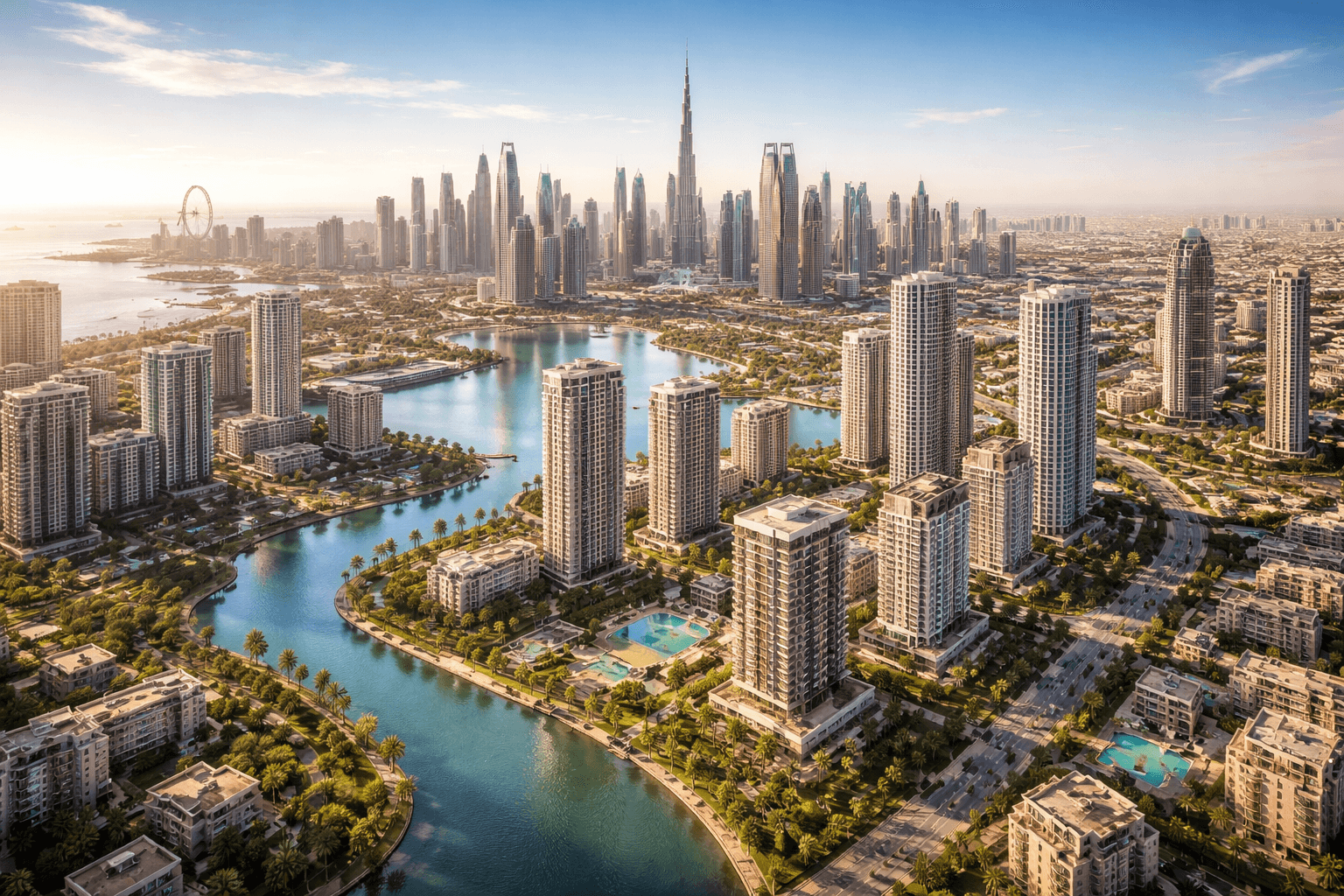
Dubai Creek Harbour feels attractive because of how deliberately it has been planned. It is taking shape as a complete waterfront district backed by Emaar, set along the historic creek and within easy reach of Downtown Dubai.
Apartments make up most of the housing here, mainly one to four-bedroom units. Recent market figures place average apartment prices between AED 1,900 and AED 2,700 per square foot, depending on the view, building, and development phase. Rental demand is steady, primarily from professionals who like waterfront living but prefer to avoid the congestion of central Downtown areas.
Access to the rest of the city is a big part of the appeal. The area already connects easily to Ras Al Khor and Sheikh Zayed Road, so getting in and out doesn’t feel like a chore. Over time, the planned Metro Blue Line is expected to make that even smoother. What really shapes daily life here, though, is how the area feels on the ground. Walking paths, open water views, and stretches of cafés and retail give people reasons to step outside, slow down, and spend time locally. That sense of openness and ease tends to resonate strongly with renters.
Dubai Creek Harbour suits buyers looking for neighbourhoods where value grows step by step as more homes are occupied, shops open, and transport links make daily life easier.
Palm Jebel Ali
Palm Jebel Ali is built on a much larger scale than Palm Jumeirah. Entry prices are still lower than in Palm Jumeirah, which is part of what draws early interest. The focus here is mainly on large villas and beachfront plots. Most villas are spacious, with 5, 6 or 7 bedrooms, and include private outdoor space, pools, gardens and direct or close beach access. For ultra-high-end buyers, there are also large plots and bespoke mansion sites available across the fronds. Projects like Palm Central Private Residences are introducing apartments and townhouses on the island, with layouts ranging from 1 to 5 bedrooms and even penthouses that stretch to nearly 10,000 square feet.
Entry-level villas start at around AED 18.5 million for a 5-bedroom waterfront villa. These can rise significantly depending on location, plot size, view and design. Buyers in this area are usually not focused on quick rental returns. Most are looking ahead, positioning themselves for capital growth over time.
Development on this scale takes time, with progress moving forward in stages instead of all at once. Rental demand is expected to grow later as homes are completed and services begin to operate thoroughly. During the early years, holding costs matter, so service charges, maintenance, and possible vacancy periods should be considered from the start.
Palm Jebel Ali suits investors who are comfortable taking a patient approach, where the potential comes from long-term value growth and future demand.
Emaar Beachfront
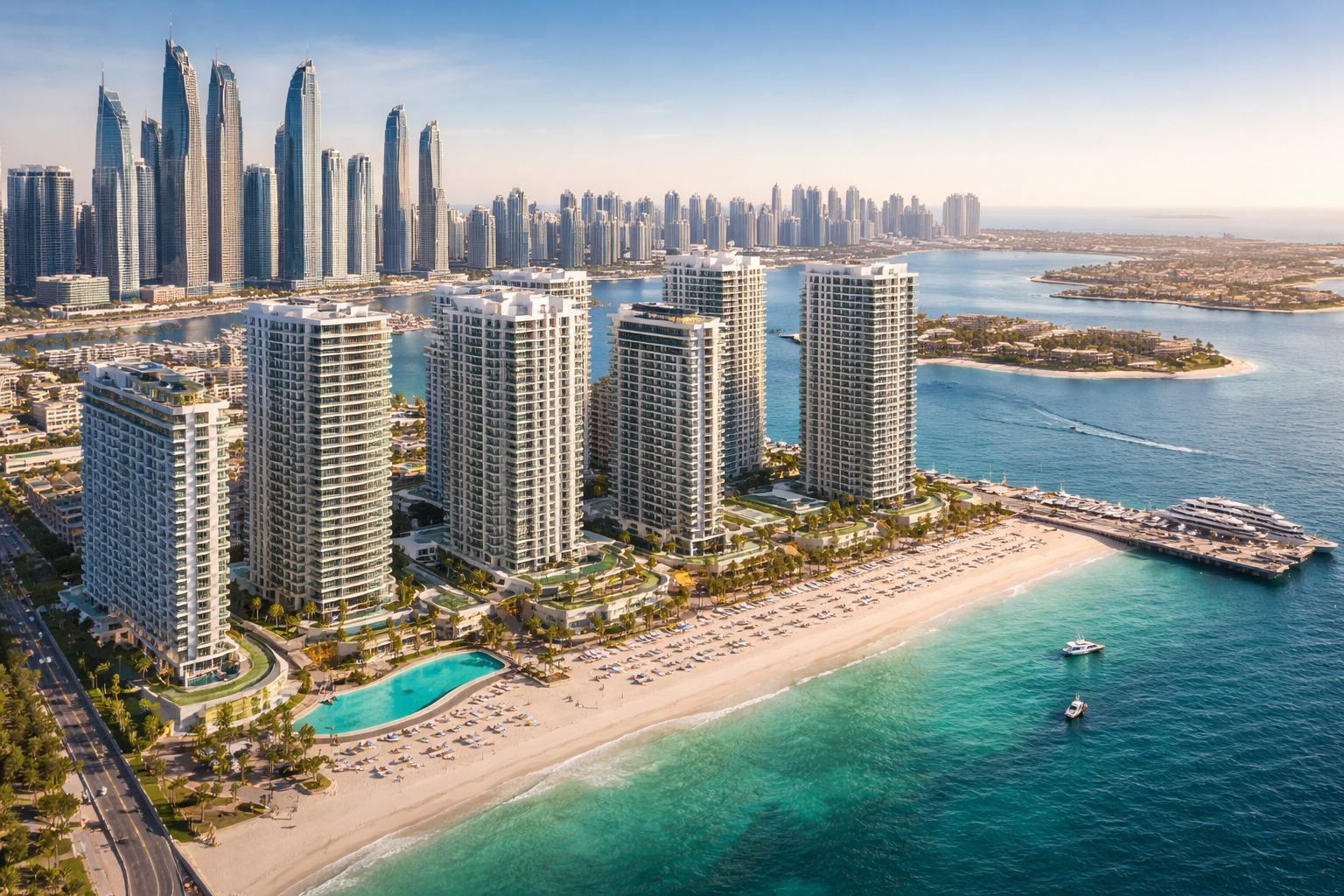
Emaar Beachfront is located between Dubai Marina and Palm Jumeirah within Dubai Harbour with direct access to Sheikh Zayed Road. That positioning explains much of the demand. Beach access on one side, city views on the other, and a short drive to major work hubs shape how people live here and why rental interest is strong.
Homes in Emaar Beachfront are mainly apartments, with a small number of luxury penthouses at the top end. Most buildings offer one, two, three and four bedroom layouts, designed with open plans and large balconies that face the sea, the marina skyline, or both. Average apartment prices range from AED 3,000 to AED 4,000 per square foot, depending on the building, floor level, and view.
Professionals working in Marina, Media City, and Downtown are already starting to look toward this area for the shorter commute and direct access to the beach. The number of beachfront plots in this location is limited, and future supply in the immediate area is controlled. That helps protect long-term value and supports steady rental demand.
Emaar Beachfront is for buyers who care about a strong location, solid build quality, and steady demand, and who are comfortable with returns that grow steadily.
Dubai South
Dubai South is near the Abu Dhabi border along Emirates Road (E611). It is built around Al Maktoum International Airport, major logistics zones, and growing business districts, which shape its demand and pricing. Homes here are preferred by people who work nearby and want to keep daily travel simple.
Residential options mainly include apartments, townhouses, and some villas. Apartments range from studios to three bedrooms, with studios usually around 350 to 450 square feet and two-bedroom units crossing 1,000 square feet. Townhouses and villas offer more space, starting from about 1,400 square feet.
Rental demand comes from aviation staff, logistics professionals, and families working in nearby zones who prefer living close to their workplace. New roads, schools, retail centres, and community facilities are being added alongside residential projects. The area grows step by step rather than all at once, which helps support long-term demand without sudden oversupply.
Dubai South suits investors focused on rental income and affordability, where consistent demand and sensible pricing matter more than premium views or luxury branding.
Majan
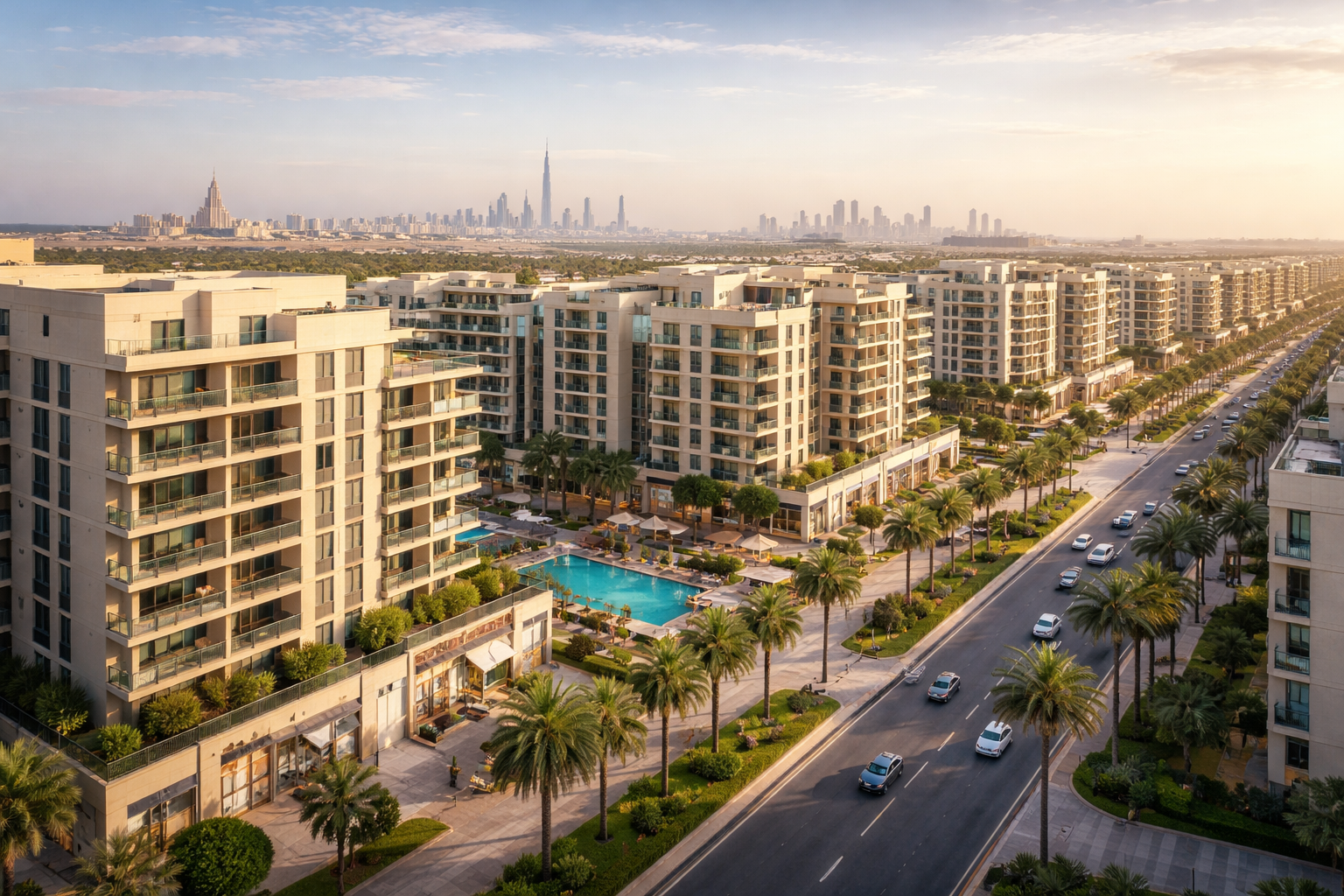
Majan in Dubailand has been gaining attention without much fanfare. The area appeals to buyers who want modern homes at reasonable prices, with easy access to Sheikh Mohammed Bin Zayed Road and quick connections to different parts of the city. Its location near leisure destinations like Global Village and IMG Worlds of Adventure adds to daily convenience without pushing prices into premium territory.
Homes in Majan are mainly mid-rise apartments in blocks, with fewer high-rise towers across the area. Most buildings offer studios, one, two, and three-bedroom layouts ranging from 400 to 1,100 square feet in many projects. Prices in Majan are more affordable than in many central areas. Apartment prices range from AED 900 to AED 1,300 per square foot, depending on the building, finishes, and size.
Rental demand in Majan mainly comes from professionals working across central Dubai who want more space without stretching budgets. Service charges in many projects stay reasonable, which helps improve net rental returns.
Majan suits investors looking for steady demand and shorter holding periods, without the need to wait years for the area to mature.
Conclusion
Property decisions in Dubai are now being made with greater care. Prices have moved, options have shifted, and buyers are taking a closer look at where the city is actually heading. Some areas are built for people who want to live by the water. Others make more sense for rental income or for buyers who want more space at an affordable price. No single neighbourhood fits every plan. However, one must understand that the area has to suit the purpose, the timeline, and the numbers. A place that works well for renting may not suit long-term holding, and lifestyle-driven locations follow a different pace altogether. Looking at how people move through these communities, where they work, and how they live day to day gives better answers.
If you’re assessing these neighbourhoods as an investor and want to understand how the numbers stack up, the next step is a proper conversation. Get in touch with us to review pricing, rental demand, and timelines in more detail.