NEWS
Dubai Real Estate Forecast 2026: Prices, Rent & Demand
Dubai’s property market in 2026 feels very different from the fast swings of past years. Deals still happen, though people now take their time, compare, and think things through before moving ahead. Homes are chosen for how they work day-to-day, not just what the numbers say. A growing population, higher rents, and longer plans are pushing buyers to look more carefully, and that shift is shaping how this year unfolds.
What the Market Looks Like Heading into 2026
Dubai’s property market did not slow down after 2024. The pace rolled into 2025 and accelerated further. Dubai Land Department data show total real estate transactions reached about AED 761 billion in 2024, up around 20% from the previous year. In 2025, that figure was already surpassed before the year ended, with property sales exceeding AED 525.87 billion in just 10 months. Deal activity remained strong, with over 125,000 transactions recorded in the first half of the year, about 26% higher than the same period in 2024.
Prices rose along with activity as well. The average price per square foot in 2025 reached AED 1,880, about 8% higher than in 2024. Rents continued to climb, especially in suburban areas where most homes remain occupied and new supply struggles to keep up. Investors find the numbers appealing, with average rental returns of nearly 7%, well above those in cities like London or New York. Off-plan projects accounted for roughly 2/3 of all sales in the first half of 2025, helped by easier payment plans and the opportunity to buy at earlier prices.
Dubai Real Estate Forecast for 2026
Dubai’s property market in 2026 looks to be on a steady path. After the heavy buying and price jumps of the past few years, the market now appears to be finding a comfortable rhythm. Some areas will see prices edge up, especially places where people already live, work, and send their kids to school. Other areas with many new buildings under construction may see prices rise more slowly as buyers gain more choice.
Apartments in well-known communities such as Dubai Marina, Downtown Dubai, and Jumeirah Lake Towers may hold their value and grow at a modest pace. These areas have a track record, strong rental demand, and limited new supply. Villas should keep attracting families who plan to stay in Dubai longer, so places like Dubai Hills Estate, Arabian Ranches, and Tilal Al Ghaf are expected to keep seeing healthy interest.
Rents are not expected to drop in any major way. Population growth, job creation, and long-term residents moving to Dubai keep homes in demand. Even with new projects completing in 2026, most well-priced units should find tenants with minimal difficulty. That steady demand keeps buyers interested, too, since in places like JVC, Dubai Hills Estate, and Business Bay, owning now costs close to what people already pay in rent.
Investors will keep looking at Dubai for income, as average rental returns are close to 7% in many communities. Short-term rentals, especially in tourist areas, will continue to play a role as visitor numbers grow.
Overall, 2026 feels like a year where the market becomes more thoughtful. People buy for a clearer reason, sellers price with greater care, and homes are chosen for how well they fit real life. Such a market tends to be healthier and easier to navigate, even if it feels quieter than in the boom years.
How Much New Housing is Coming in 2026
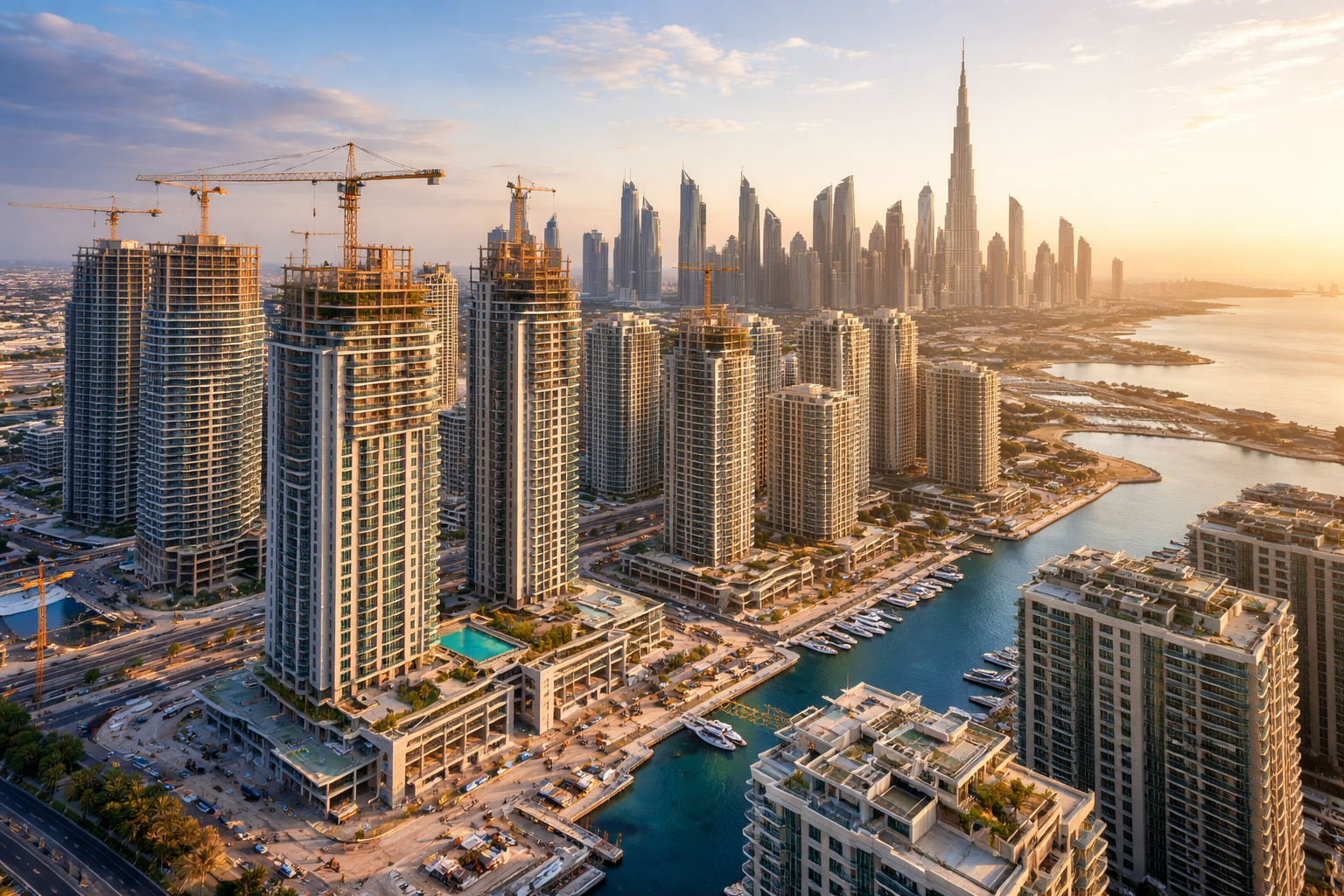
Builders in Dubai continue to add new homes, which always makes people nervous. Yet the numbers appear more balanced when compared with how fast the city is growing. Approximately 42,000 to 45,000 new units were planned for 2025, and a similar number is planned for 2026. Dubai’s current population has crossed 4 million, so a large share of that supply is already in demand.
Some projects run late, others move faster than expected. Many buyers who purchase off-plan homes plan to live in them rather than sell them immediately. That changes how new supply enters the market. Homes do not remain empty because people move in soon after handover.
That's why rental demand still appears healthy. New buildings are opening, yet most well-priced homes sell without delays. Rents may not jump as fast as before, though big drops do not seem likely either.
The Link Between Property and Residency
Residency linked to property has changed how people view homeownership in Dubai. A freehold property valued at AED 2 million or more allows the buyer to apply for a 10-year Golden Visa, and that carries real weight. Families see it as a way to plan their future. Business owners value the security it provides, and retirees feel more settled knowing their right to stay is not tied to employment.
That is one reason demand has not cooled even after strong price growth. Buyers will stretch a little further to reach the visa threshold, keeping mid-range and premium homes moving in 2026. Developers have adjusted too, with many new projects now priced around that level because they know who is buying.
The visa itself does not create buyers. It gives people already living in Dubai more confidence to commit. In a year like 2026, where the market depends more on residents than speculators, that link between property and residency will support demand across the city.
How Investor Behaviour is Shaping the 2026 Market
A few years ago, many investors came to Dubai hoping for quick price jumps. Buy today, sell next year, and move on; that approach is expected to keep fading in 2026. More investors now focus on a home's monthly cash flow. Rental returns in Dubai are higher than in most major cities. In areas such as JVC, International City, Business Bay, and Dubai Silicon Oasis, many apartments are projected to deliver returns of 6-9% after costs.
Holiday homes in Dubai Marina, Downtown, and JBR are likely to keep seeing solid bookings, supported by rising visitor numbers. Dubai welcomed more than 17 million tourists in 2024, and that figure kept rising through 2025, which has fed demand for short lets and serviced apartments.
Tax rules will also remain part of the appeal. Rental income in Dubai is not subject to income tax, and there is no capital gains tax on the sale of property. That setup is expected to continue attracting investors from Europe, South Asia, and the Middle East who want a steady income without complex deductions reducing it.
What Buyers Want in 2026
A shiny lobby no longer sways the decisions of Dubai property buyers in 2026. The way a home works day-to-day. Storage, parking, and nearby schools carry more weight now. Many people who have rented for years start thinking about where the next part of their lives is heading, and that changes what feels important.
Working from home has also changed how homes get chosen. Commute still matters, though space for a desk or a small home office now carries similar weight. Neighbourhoods with parks, gyms, and places to grab coffee tend to attract more attention because they fit how people spend their week.
New projects now come with bigger balconies, rooms that can double as workspaces, and shared areas for meetings or quiet time. Not everyone uses these features, yet enough buyers request them that they now shape how new homes are designed.
What Sellers Should Expect in 2026

Selling a home in 2026 may take more time than it did during the peak years. Listing on Monday and closing by Friday will be less common. Well-priced homes should sell quickly, though buyers are expected to take their time, compare options, and view several properties before making a decision.
Homes in established communities are likely to move faster. Properties with awkward layouts or higher service charges may take longer to find buyers. Clean rooms, fresh paint, and minor touch-ups make it easier for people to imagine living there, and those details will continue to matter.
Risks that Could Shape the 2026 Outlook
Even a steady market has factors that can shift sentiment, and 2026 is no different. A few key factors will be worth monitoring as the year unfolds.
- A global economic slowdown could prompt some buyers to pause before making major property decisions.
- Changes in oil prices affect the wider region, which can influence spending and investment.
- Interest rates remain something to watch, even though a large share of buyers use cash.
- New supply in certain districts could slow price growth if too many homes enter the same area at once.
Even with these factors, population growth, new businesses, and rising tourism will support housing demand across Dubai.
Conclusion
2026 does not look like a year of wild jumps or sudden drops, and that is not a bad thing. Prices are expected to move more slowly; buyers will take longer to decide, and sellers will need to price carefully. That kind of market gives families space to plan, investors more precise numbers to work with, and developers better insight into what people truly want from a home. Dubai keeps growing through new communities, new roads, and a rising population, and people choose the city for work, business, and long-term living. A property bought for family life will follow one path, and a property bought for rental income will follow another, yet both can make sense when the goal is clear. That steady, thoughtful approach is what shapes Dubai real estate in 2026.
If a home or investment in Dubai is part of your 2026 plan, our team can help you explore real options across the city.
Contact us today to discuss pricing, rent, and what makes sense for your situation.