
SELLING
Best Time to Sell Property in Dubai
Selling a property in Dubai is not just about putting it on the market and waiting. The timing matters a lot. Get it right, and you could walk away with a significantly higher return. Get it wrong, and your property could sit unsold for months, or worse, sell below its actual worth.
So let's talk about exactly when you should sell, what market data says, and how to read the signs that tell you the moment is right.
Key Takeaways
- October to April is the strongest period to sell property in Dubai.
- The summer months (May to September) see lower transaction volumes and fewer active buyers.
- Off-plan investors commonly sell 3–6 months before handover to maximise gains and avoid increased supply.
- Rising transaction volumes, strong rental yields, and low inventory are key signals that market conditions favour sellers.
- Waiting for the absolute market peak can reduce returns if conditions begin to change unexpectedly.
- Dubai charges no capital gains tax on the sale of residential property, meaning sellers keep the full profit from any price appreciation.
Where Does the Market Stand Today?
Every real estate market has cycles, and Dubai is no different. The city has gone through notable boom periods (2004–2008, 2013–2014, and the current upswing that began in 2020) and corrections in between.
Right now, Dubai is firmly in a seller's market. According to the Dubai Land Department (DLD), Q1 2026 recorded total real estate transactions worth AED 252 billion, a 31% year-on-year increase in value and a 6% rise in transaction volume compared to the same period in 2025. A total of 60,303 real estate transactions were completed in just three months.
Investment activity is equally strong. Real estate investments in Q1 2026 reached AED 173 billion across 57,744 transactions, a 22% jump in value and 7% in volume. The investor base grew to 48,448 active investors, with 29,312 being new entrants to the market, up 14% year-on-year. Luxury real estate alone accounted for AED 87.71 billion, a 26% increase, signalling that high-value demand is not slowing down.
Q1 2026 posted record-breaking transaction figures, a sign that sellers are operating in one of the strongest market conditions Dubai has seen in recent years.
It is worth noting that a substantial supply pipeline is scheduled for delivery between 2026 and 2028, with new units concentrated in areas such as Jumeirah Village Circle, Dubai South, and Mohammed Bin Rashid City. Analysts consider this the most significant risk factor to the current upswing. Sellers in areas facing concentrated new supply may want to weigh this timing alongside the broader seasonal and market-cycle factors discussed below, since a wave of handover inventory in a specific community can soften prices locally even while citywide demand remains strong.
The Best Seasons to List Your Property

Dubai has well-established seasonal patterns at this point. The months from October through April see higher buyer activity. Here's why.
Temperatures cool down during these months, so property viewings become easier for buyers and agents. More importantly, many international buyers visit Dubai during these months. Many of them come with buying intentions.
The period between January and March is equally active. Buyers who have made financial decisions at the start of the year actively start their search. The rental market tightens around this time, too, which pushes many long-term renters toward purchasing instead.
April can still be productive, but activity starts to taper as temperatures rise and the summer holidays approach.
May through September is historically the slowest period. Many residents travel abroad, international buyer visits drop, and transaction volumes dip across the board. DLD data show that transaction counts in the summer months can be 20–30% lower than in peak-season months.
Practical Tip:
List your property by late September or early October at the latest if you want to catch the full wave of buyer activity in the season ahead.
How Interest Rates Affect Property Sales?
A large portion of property buyers in Dubai use mortgage financing. When interest rates are lower, buyers can afford more, which increases the number of active buyers in the market and puts upward pressure on prices.
Fixed mortgage rates in Dubai currently range from 3.49% to 4.75% per annum for residents, with the sharpest published 1-year fixed rates starting near 3.49% and most major banks clustering around 3.95% to 3.99% for 2 to 3-year terms.
Variable rates, priced as EIBOR plus a bank margin of 1.0% to 2.25%, currently sit in the 4.85% to 6.1% range depending on the borrower's profile, with 3-month EIBOR sitting at approximately 3.85% as of mid-2026.
The UAE dirham is pegged to the US dollar, so the UAE Central Bank mirrors US Federal Reserve rate decisions. The US Federal Reserve has held its rate steady through early 2026 at around 3.6%, its lowest in nearly three years. The UAE Central Bank has held its base rate at 3.65% through mid-June 2026 in line with that stance. Rates are not expected to drop sharply in the near term, but they are also lower than they were 18 months ago.
Sellers benefit from this environment because more buyers can qualify for mortgages. More qualified buyers in the market means more competition for available properties, which supports stronger sale prices.
Location Can Influence the Right Time to Sell
Dubai's real estate market does not move uniformly. Some areas appreciate faster due to new infrastructure, transport links, or proximity to major developments.
Areas near the Expo 2020 site have seen sustained interest since the event. Communities like Dubai South, Jumeirah Village Circle (JVC), and Mohammed Bin Rashid City have been on a consistent upward trajectory. If you own property in one of these areas, the timing window for selling at a premium is now, while demand from residents working in nearby business hubs is strong.
On the other hand, older secondary-market areas that have not benefited from new infrastructure may see slower appreciation. If your property is in one of these areas, timing the sale around broader market peaks becomes even more critical.
The Timing Differs for Off-Plan & Ready Properties
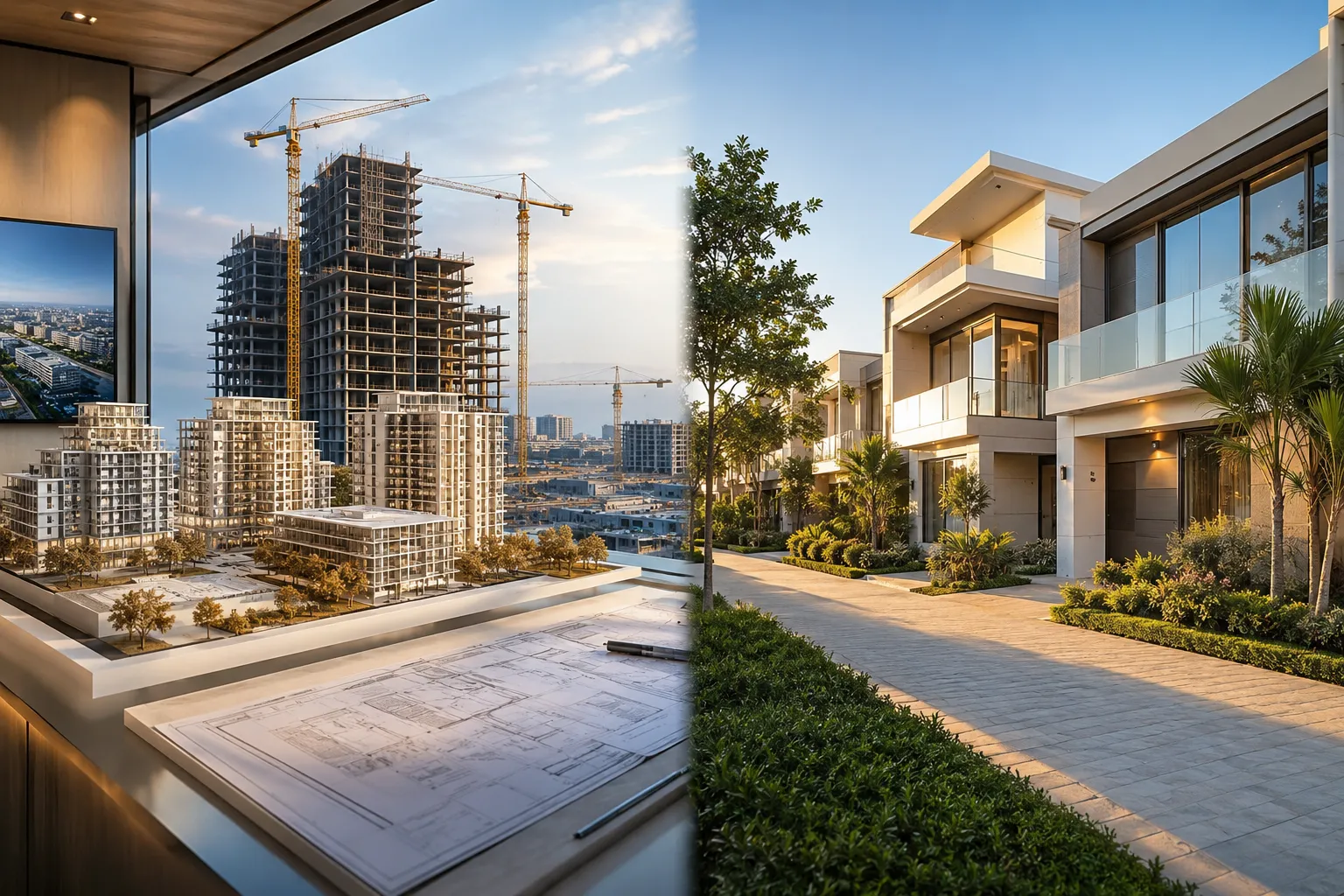
Selling an off-plan property has a different logic. Sellers in the off-plan space look to sell once the property has appreciated in value but before handover, to avoid paying the remaining instalments or service charges.
In a rising market like Dubai's current one, many investors buy off-plan property at launch prices and sell at a profit 6 to 18 months later as the project nears completion. Data from Property Monitor shows that off-plan resale prices in 2024 were, on average, 18–25% higher than original purchase prices in communities such as Creek Harbour, Emaar Beachfront, and Damac Hills 2.
The key for off-plan sellers is to sell at least 3–6 months before handover, when buyer interest is still high and before new handover inventory floods the supply of that specific community.
The timing for ready properties aligns more closely with the seasonal and market-cycle factors covered earlier.
Signs the Market Is Telling You to Sell Now
There are specific indicators worth watching. Selling when multiple signals align gives you the highest probability of a strong result.
Rising Transaction Volumes
When DLD data shows month-on-month transaction growth, it signals active buyer demand. The best time to list is during or just before these peaks.
Increasing Rental Yields
Dubai's gross rental yields currently average 6–8% in many communities, higher than most comparable global cities. High rental yields attract investors, and investors are active buyers. If rental yields in your area are rising, buyer interest is likely rising too.
Low Inventory In Your Community
Check how many comparable properties are listed in your building or community. If supply is thin and new listings are getting offers quickly, that is a clear signal that demand outpaces supply in your specific area.
What Makes Sellers Wait Too Long?
One of the most common mistakes is waiting for the absolute peak before selling. Markets do not announce their peaks. By the time everyone knows the market has peaked, it has already started to correct.
Many Dubai sellers held on after prices peaked in 2014, expecting a quick recovery. Instead, the market entered a prolonged correction lasting nearly five years, with prices declining 25 to 35% from peak levels before stabilising around 2019 to 2020. It remains the longest downturn in Dubai's real estate history. Sellers who exited near the 2014 peak achieved significantly better outcomes than those who waited for a recovery that took the better part of a decade to fully materialise.
The lesson is not to strive for perfection. It is to act when the conditions are clearly favourable, not to chase the last few percentage points of gain.
Practical Checklist Before Listing

Before putting a property on the market, it's best to work through a few practical steps:
- Get a current market valuation from a RERA-registered agent, not just an online estimate.
- Review DLD's data for recent comparable sales in your building.
- Make sure the property is well-presented. Minor repairs and a fresh coat of paint genuinely move the needle.
- Confirm that any outstanding service charges are settled, as buyers and agents will check.
- Understand the full cost of selling property in Dubai, which involves agent commission (2%), DLD transfer fees (4%), and mortgage settlement penalties if applicable. Early settlement fees are typically capped at 1% of the outstanding loan balance or AED 10,000, whichever is lower, under UAE Central Bank regulations. Sellers with an active mortgage should request a liability letter from their bank early in the process to confirm the exact settlement figure.
Conclusion
There is no single perfect day to sell a property in Dubai, but there is absolutely a better window. The October to April season, combined with rising transaction volumes, favourable borrowing conditions, and strong demand in your specific area, is when sellers achieve better prices and faster closings. Sellers who do their homework, price realistically based on actual comparable data, and list during peak buyer activity months are in the strongest position. Do not wait for perfect conditions that may never fully arrive. Act when the data is clearly in your favour.
Take control of your timing and step into the market prepared. Book a free valuation call with one of Linda’s senior property consultants today and find out exactly what your property is worth in today's market.


