INVESTMENT
How to Diversify Your Real Estate Portfolio in the UAE
Dubai property rarely follows the same pattern. Some years push rents higher, while others slow buyer activity as different communities rise and fall at their own pace. That back and forth is normal, though problems start when every dirham is locked into one type of property in one place.
Diversification changes how risk feels in real life, not in a finance book, but in the way income keeps coming and value holds up across different market cycles. One apartment in one tower might feel comfortable at first, but a small group of homes spread across various parts of the city and used in different ways creates a much steadier base.
Dubai makes diversification easier than in most markets, with clear rules on foreign ownership, mortgage options for expats, and steady demand from both residents and visitors. The real question is not whether to diversify, but how it actually plays out across Dubai’s property landscape.
Why Diversification Matters in Dubai
Two main forces drive Dubai’s property market.
- People keep moving to the city for work and lifestyle
- Investors keep buying homes for rental income
Currently, Dubai has a population exceeding 4 million residents. Population growth is still rising as new visas, jobs, and business licences are issued. Every new household needs a place to live, and that keeps rental demand active across the city.
Additionally, Arabian Business claims that more than 215,700 property sales were recorded in 2025, with total deal value exceeding AED 686.8 billion. Those transactions did not come from just one type of property. They were spread across studios, villas, offices, hotel units, and retail spaces.
Each of those segments moves for its own reasons:
- Luxury villas react to global wealth and high-net-worth buyers.
- Mid-range apartments move with salary growth and job stability.
- Short-term rentals follow tourism and visitor numbers.
- Offices depend on business activity and company expansion.
When one segment slows down, the others usually keep going. A diversified portfolio leverages those differences rather than relying one a single source of demand.
Start with More than One Property Type
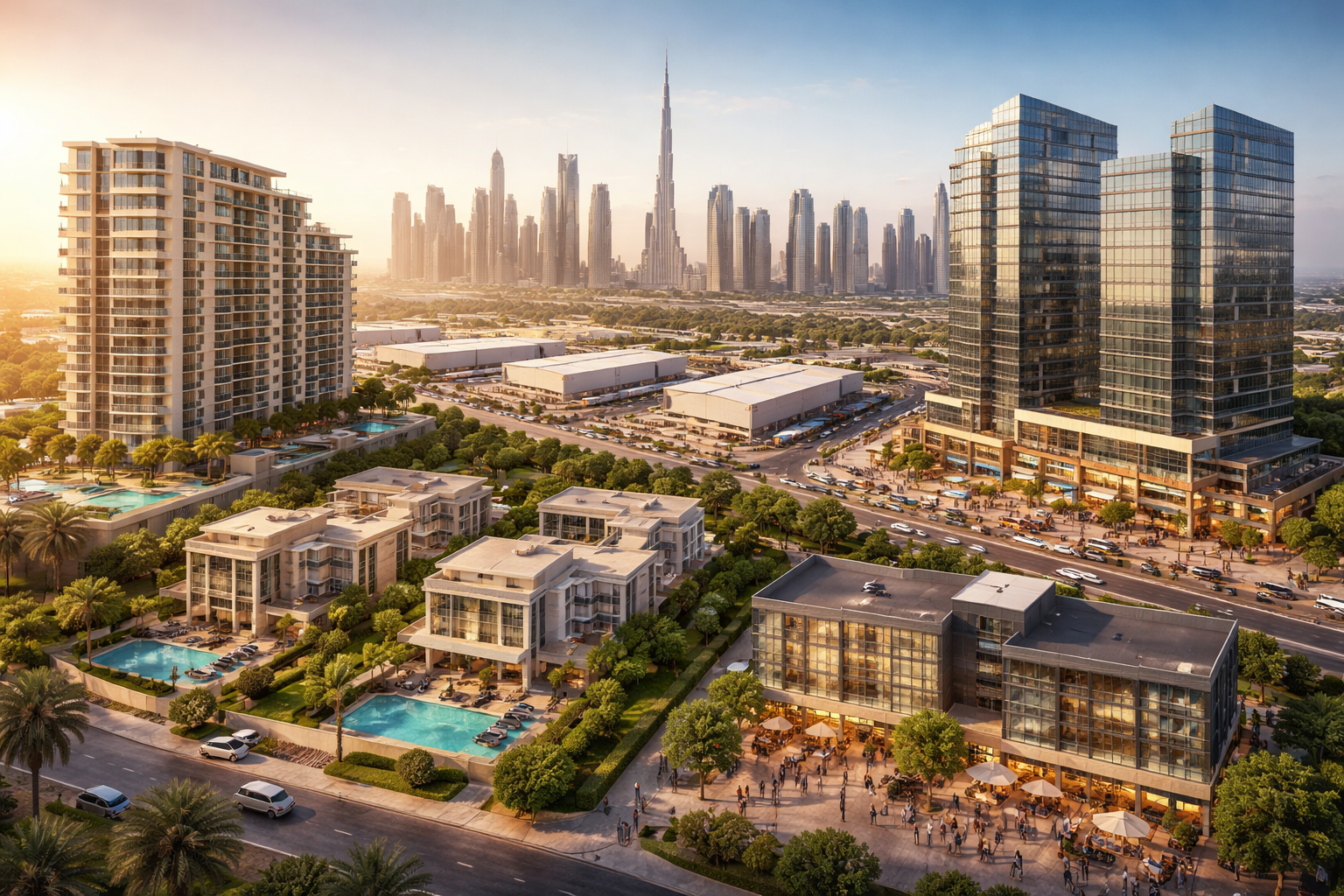
Apartments become the first step into Dubai property because they feel simple enough. One unit, one tenant, rent coming in each year. That works, but relying only on apartments leaves a portfolio tied to one small part of the market, and Dubai runs on much more than that.
Residential homes sit on one side of the picture, commercial on the other, and both respond to demand in very different ways. Homes bring steady rental income because people always need a place to live, even during slower years. Commercial properties follow business activity. Offices in Business Bay or Jumeirah Lake Towers rent at a higher per-square-foot rate than most apartments. Warehouses in Al Quoz or Dubai Industrial Park support logistics and online retail. Shops in busy communities generate revenue from daily foot traffic.
The average apartment yield across Dubai ranges from 6% to 8%. Some communities, such as Jumeirah Village Circle, Dubai Silicon Oasis, and International City, reached even higher levels. Office yields in strong buildings ranged from 7% to 9%. Retail units in tourist zones generated more sales when foot traffic remained strong.
A portfolio that holds residential and commercial properties spreads income across different demand sources. So one tenant moving out of an apartment does not cut off cash flow when an office or shop continues to pay rent.
Balance Short-term and Long-term Rentals
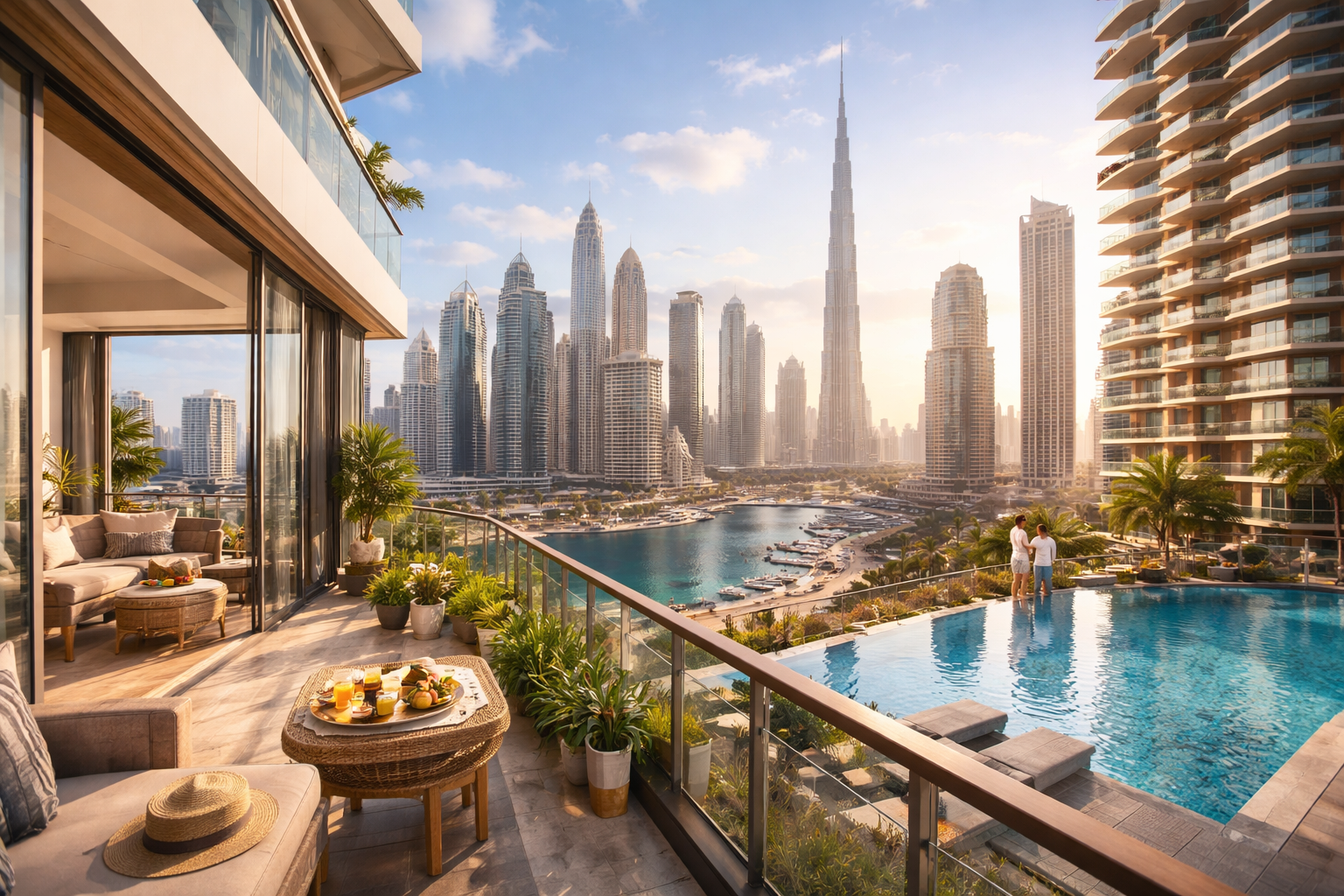
Dubai operates two rental markets simultaneously. Long-term leases serve residents, and short-term rentals serve visitors. A one-bedroom apartment in Dubai Marina, leased long term, may earn AED 90,000 to AED 120,000 per year. The same unit on short-term platforms can earn more during peak months and less during slow months. Over a whole year, the total can be higher when the property is well managed.
Short-term rentals in Dubai need more hands-on work, from cleaning to guest check-ins and platform fees, though that effort brings flexibility and higher peak income. Long-term rentals keep things steady, with a family signing a yearly contract and rent coming in through cheques.
Holding both balances risk, as tourist seasons add extra cash and residential leases keep the base income coming in.
Spread Across Price Ranges
Most people buy whatever fits their budget, which usually means a mid-range apartment. That choice makes sense, but trouble starts when every property you own is aimed at the same kind of renter. In Dubai, some tenants earn AED 8,000 a month, while others earn AED 80,000. They look for very different homes, and demand for those homes does not rise or slow down at the same time.
Affordable homes in areas such as International City, Dubai South, and Deira serve workers and small families, where demand remains strong because price is a key factor. Mid-range units in JVC, Arjan, or Town Square attract professionals, with rents aligning with salaries. High-end homes in Downtown, Palm Jumeirah, or Dubai Hills appeal to executives and overseas buyers, with demand driven by wealth and visa regulations.
Holding properties across two or three of these tiers helps keep income balanced, so a slowdown in one market does not drag the entire portfolio down.
Use Location as a Risk Tool
Dubai looks like one big market on the surface, yet each area is driven by its own set of demand drivers.
- Downtown depends on tourism and corporate offices.
- Dubai Marina attracts young professionals and short-term renters.
- JVC serves families and budget-focused tenants.
- Dubai Hills draws long-term end users.
- Dubai South is centred on aviation and logistics.
When one area cools, another usually picks up. Buying across two or three communities spreads that risk. A Marina apartment, a JVC townhouse, and a Business Bay office do not rise and fall at the same time, so when one slows down, the others keep income and resale prospects on track.
Add Off-Plan into the Picture
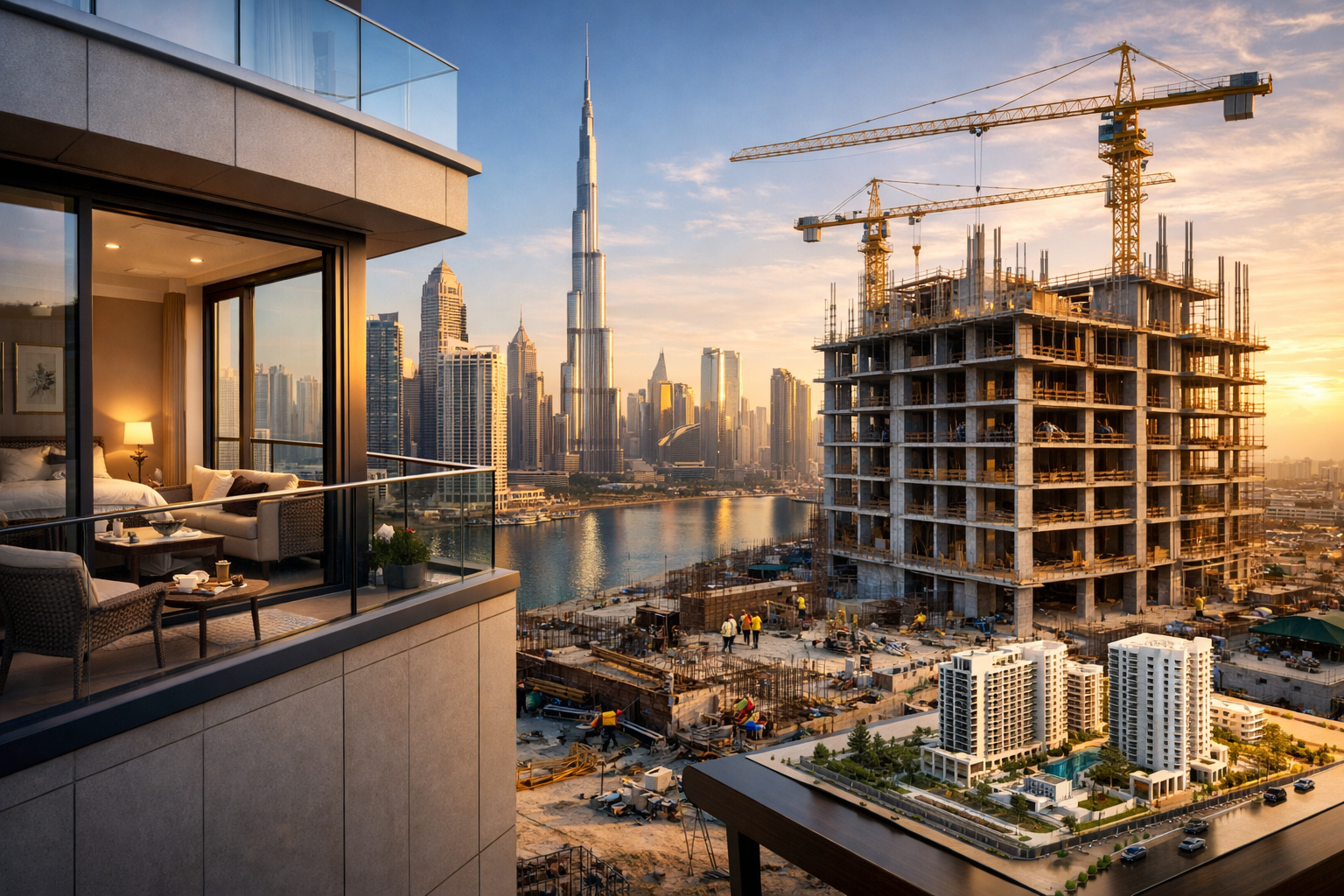
Ready homes start paying rent straight away, whereas off-plan homes focus more on price growth over time. Both play different roles inside a portfolio. A one-bedroom in Business Bay might cost around AED 1.5 million if it is ready to move into. A similar off-plan unit could be priced at around AED 1.1 million on a payment plan, and that gap usually turns into equity by handover.
Off-plan purchases carry delivery risk, but Dubai now requires escrow accounts and RERA oversight, keeping buyer funds protected as projects progress. Owning both ready and off-plan homes spreads time risk, with one producing rent today and the other building value for the future.
Use Mortgages to Stretch Diversification
Some buyers prefer paying in cash to buy a property for the speed it brings, while others use mortgages to spread their money across more than one property and build a broader portfolio.
UAE banks lend up to 80% of the purchase price to expats for homes priced below AED 5 million, with monthly payments capped at about half of income. That structure lets someone with AED 2 million in cash control property worth several times that amount across multiple units.
Instead of putting everything into one home, three smaller mortgages across different areas spread the risk. One tenant moving out or one area slowing down does not hit the entire portfolio at once.
When used responsibly, debt can be a practical way to build a more balanced property portfolio.
Conclusion
Real estate wealth in Dubai builds over time through planning and structure, not luck. Diversification plays a significant role in that by creating income from more than one source and spreading price exposure across different parts of the market. That way, a single decision does not carry all the weight. A portfolio that includes apartments, a townhouse, and a commercial unit handles market shifts better than five identical studios in one tower, since prices change, people move, and rules adjust in ways that do not hit every segment at once. That approach helps protect capital and keeps income coming in year after year, not just during strong months. In a city that keeps growing, spreading property across types, locations, and price levels gives portfolios a much firmer base.
A good portfolio starts with the right choices in the right areas. Our team helps buyers in Dubai find properties that fit real budgets, tangible goals, and real demand, so every purchase works as part of a bigger picture.
Contact us today and start building a portfolio that works across years, not just one deal.