INVESTMENT
How Service Charges Affect Dubai Property Returns
A lot of property buyers in Dubai get hooked on the rental yield numbers, and honestly, the figures look great on paper. A 7% gross yield in Dubai Marina or an 8–9% yield in Jumeirah Village Circle sounds like a solid deal. But here is the part most people skip, “service charges”. Once those figures are factored in, the actual return on your investment looks quite different from what the brochure says.
Service charges are annual fees paid by property owners to maintain shared spaces and facilities in a building or community. Every owner pays for cleaning, security, elevator maintenance, pools, gyms, landscaping, and building management with no exceptions. In Dubai, these fees are regulated by the Real Estate Regulatory Agency (RERA) under the Owners Association law.
Key Takeaways
- RERA regulates and approves service charges in Dubai
- Luxury communities come with higher yearly fees
- Lower service charges can improve net rental income
- Older towers may face rising maintenance costs
- Long-term profits depend on yearly ownership costs
What Are Service Charges in Dubai?
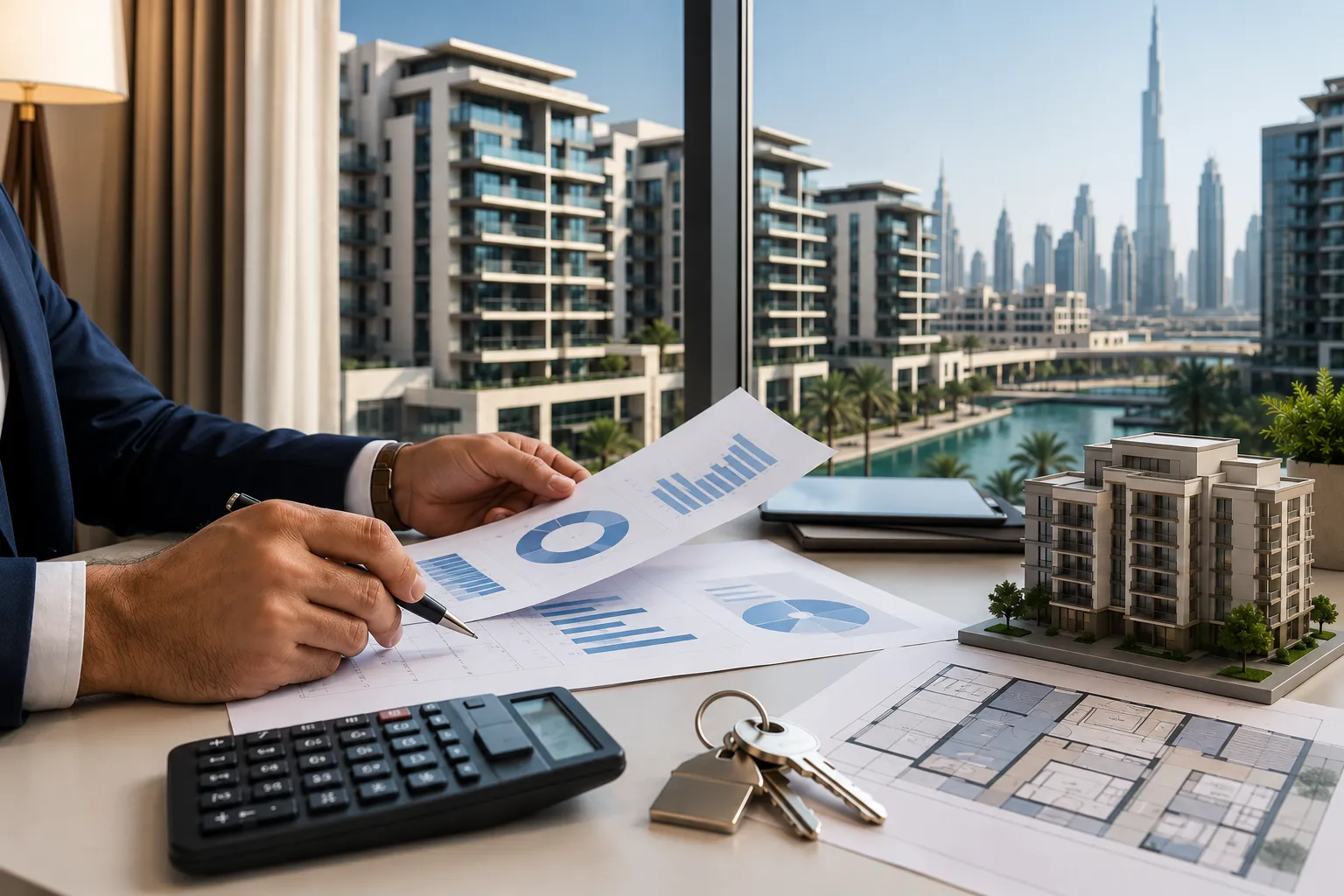
RERA publishes a Service Charge Index every year. The index lists approved service charge rates per square foot across different areas of Dubai. Rates vary quite a bit depending on location and the type of property.
As of the most recent RERA data, here is a rough picture of what owners pay annually per square foot:
Community | Property Type | Average Cost (AED / Sq. Ft.) |
Downtown Dubai | Apartment | AED 17 – AED 45 |
Dubai Marina | Apartment | AED 14 – AED 28 |
Jumeirah Lakes Towers (JLT) | Apartment | AED 13 – AED 17 |
Jumeirah Village Circle (JVC) | Apartment | AED 10 – AED 16 |
Arabian Ranches | Villa | AED 3 – AED 5 |
Dubai Hills Estate | Villa / Townhouse | AED 4 – AED 7 |
Note that RERA approves service charge rates per building, not per community. Two towers in the same area can carry significantly different rates depending on their amenities, age, and management company. Always verify the rate for the specific building you are purchasing in rather than relying solely on the community average above.
So, a 1,000 sq ft apartment in Downtown Dubai costs the owner anywhere from AED 17,000 to AED 45,000 per year in service charges alone, and significantly more in the most premium towers. That is before mortgage payments, agency fees, or any maintenance costs come into the picture.
The Difference Between Gross Yield and Net Yield
When you see advertised rental yields in Dubai, most of those figures are gross yields. Gross yield is annual rent divided by the purchase price, multiplied by 100. Net yield is what actually lands in your pocket after subtracting all costs.
Take a practical example of a one-bedroom apartment in Business Bay priced at AED 900,000, which rents for AED 75,000 per year. To see the true picture, break down the numbers:
Step 1: Calculate the gross yield.
Divide the AED 75,000 annual rent by the AED 900,000 purchase price. This gives a headline gross yield of around 8.3%.
Step 2: Deduct the service charges.
Subtract AED 15,000 per year for an 800 sq ft unit.
Step 3: Account for agency fees.
Add the agent commission of 5% of the annual rent, totalling AED 3,750.
Step 4: Factor in property management.
Include property management fees of around 8–10% (another AED 6,000 to AED 7,500).
Step 5: Total the expenses.
Combine these fees with occasional maintenance costs. The total annual cost to the owner easily exceeds AED 26,000 and may reach AED 28,000.
Step 6: Calculate the net yield.
Subtract the total costs from the rent and divide by the purchase price.
The net yield on that same apartment is closer to 5.2%-5.5%. A real difference from the 8.3% headline number.
It is also worth noting that service charges are not static. Current market forecasts point to increases of 5 to 10% across Dubai in 2025, driven by rising utility costs, ageing building infrastructure, and sustainability compliance requirements. Investors should factor in gradual annual increases when projecting returns over a five or ten year holding period.
Why Do High-end Areas in Dubai Charge Higher Service Charges?
Premium areas in Dubai demand premium maintenance costs. A unit in Downtown Dubai or a luxury high-rise in Dubai Marina carrying a rooftop pool, concierge, and high-end building features comes with a large annual bill.
Consider an 800-square-foot apartment in Downtown Dubai with a service charge rate of AED 22 per square foot. The owner pays AED 17,600 out of pocket every year just for building upkeep. Over five years, that total reaches AED 88,000 in maintenance fees alone. This expense eats directly into total investment returns.
Luxury properties command higher rents, but the gap between gross and net yields is wider in premium locations. Buying a premium property requires careful calculation of these numbers before committing capital.
Why Budget Neighbourhoods Offer Better Returns?
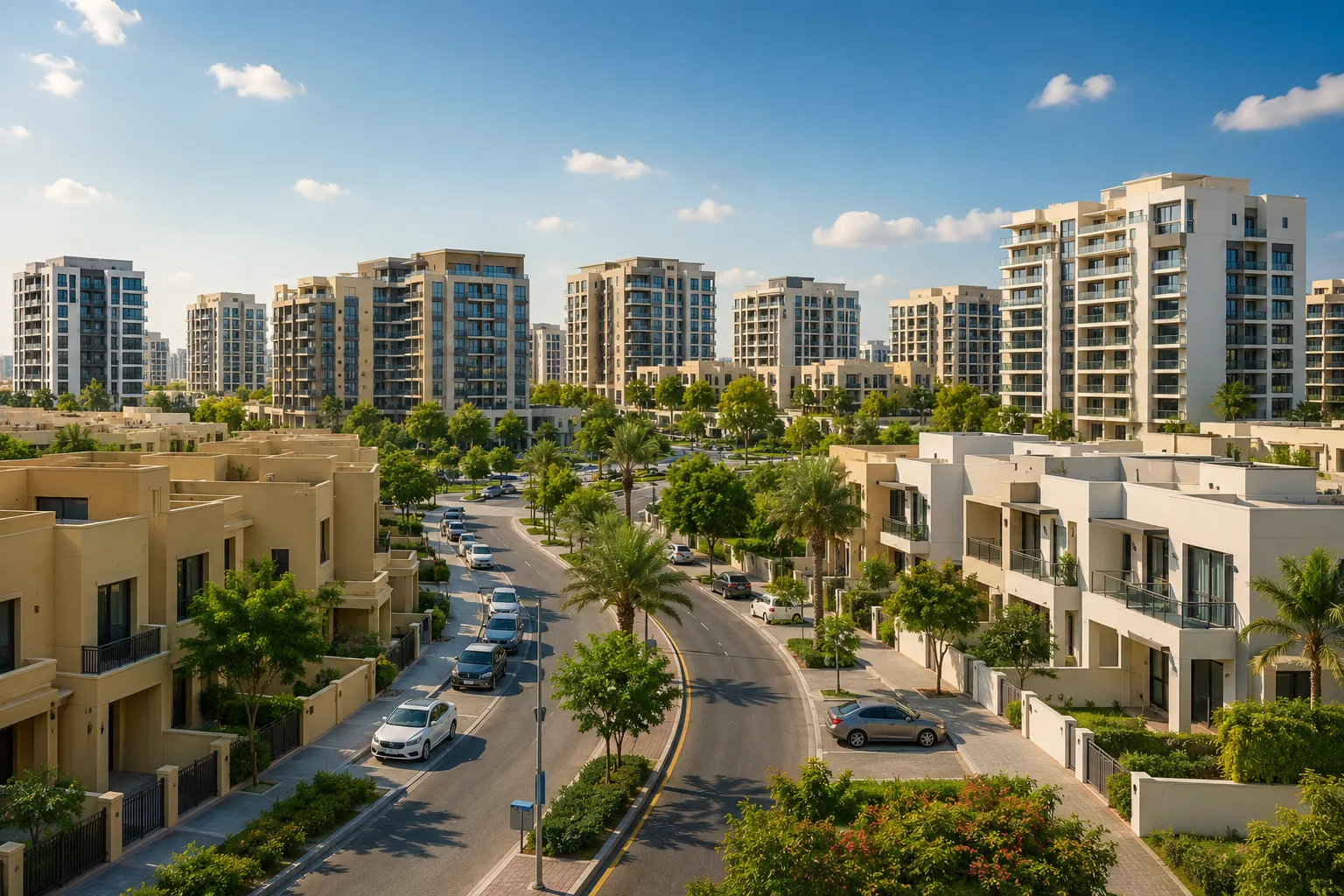
Areas like Jumeirah Village Circle (JVC), Dubai South, and Al Furjan carry much lower service fees. Townhouses or standard properties in these areas see rates averaging between AED 3 and AED 8 per square foot. A 900-square-foot unit with a service charge of AED 5 per square foot requires only AED 4,500 per year in upkeep costs.
Lower purchase prices combined with minimal service fees keep the net yield gap small. A gross yield of 7.5% in JVC translates to a net yield of 6.2% to 6.5%. Lower expenses lead to a much healthier profit margin than in premium zones.
Service Charges and Long-Term Capital Growth
Service charges do not just affect annual yield. They also play a role in how much a property appreciates over time.
Properties in well-managed buildings with fair service charges attract better tenants and hold value longer. A building where the owners' association is poorly run, for example, fees collected but maintenance ignored, elevators breaking down regularly, will see slower price growth and higher vacancy rates.
Communities with transparent service charge management, regular audits, and proper upkeep see stronger demand from tenants and buyers. In Dubai's competitive market, building quality directly influences rental premiums.
Dubai Land Department data show that properties in well-maintained communities such as Arabian Ranches and Emirates Hills have recorded annual capital growth of 5% to 9% over the recent three-year period, partly driven by consistent community management. Past performance reflects specific market conditions and is not a guarantee of future returns.
How RERA Protects Dubai Property Investors?

RERA introduced the Service Charge Benchmarking System to protect owners from being overcharged. Developers and owners' associations must submit audited financial statements and justify any charges exceeding the RERA benchmark.
Owners can file complaints if service charges appear inflated or if funds are being misused. The system provides buyers with a layer of protection that is not available in many other real estate markets worldwide.
Before buying, check the service charge history for the specific building, not just the rate per sq ft, but look at whether there have been special levies or emergency fund collections in recent years. Some buildings have faced sudden, major repair bills, such as facade replacements, elevator overhauls, and pool repairs. These unexpected costs result in one-time special charges passed directly to owners.
What Buyers Should Do Before Signing
Protecting your investment against unexpected costs requires performing thorough due diligence before finalising any transaction. Buyers can safeguard their net returns by taking three specific actions during the purchase process:
- Request the service charge certificate from the seller to review past statements. Historical records track fee hikes and highlight past unexpected special levies.
- Cross-reference the rates against the official RERA Service Charge Index portal. Property agents share attractive gross numbers, but the net figure reveals the true profitability. Also confirm whether district cooling (chiller) fees are included within the service charge or billed separately by a provider such as Empower or Emicool. In buildings where chiller is separate, this cost can add AED 5,000 to AED 15,000 or more per year and must be included in any net yield calculation.
- Verify the building reserve balance with the management company. A healthy sinking fund prevents sudden out-of-pocket financial assessments down the line.
- Check the building's records on the Mollak platform, the RERA-regulated system where all owners' association budgets are submitted, approved, and published. Mollak allows buyers to view audited financial statements, confirm the RERA-approved rate for the specific building, and review payment history before committing to a purchase.
Final Thoughts
Dubai's real estate market delivers some of the best rental yields globally. Gross yields of 6% to 9% across many areas are attractive compared to markets like London, Singapore, or Hong Kong, where net yields barely touch 2% to 3%. The difference between a good investment and a great one comes down to service charges. A property in the right location, with reasonable service charge rates, proper building management, and strong rental demand, is the one that commands real returns. Service charges do not break deals, but every investor must calculate these fees before signing a purchase check.
Don’t get stuck with unexpected service charges or inflated yield claims. Connect with Linda’s real estate team and get a realistic financial breakdown for your next Dubai investment.