
RENTING
Should You Furnish Your Rental Property in Dubai?
If you own a rental property in Dubai, you will face this question sooner or later. Should the property be rented, furnished or left empty? It sounds like a simple choice, but it affects who shows interest, how quickly the property rents, and the level of involvement during the tenancy.
In Dubai, this decision is practical, not personal. The way tenants search, how fast they move, and how long they stay all play a role. A furnished home attracts a different type of renter than an unfurnished one, and you notice the difference once people start calling.
Summary
Furnishing a rental property in Dubai results in faster returns but requires more ongoing involvement. An unfurnished setup attracts longer stays and fewer day-to-day issues. The right choice depends on the property, its location, and how involved you want to be once the tenant moves in.
How Tenants Search for Property for Rent in Dubai?
Most tenants in Dubai start their search online because that is simply how renting works here now. Property portals show people certain listings first, and filters narrow the rest. When comparing furnished vs unfurnished property in Dubai, some tenants select furnished options because they save time and effort. Others prefer unfurnished homes for more control over how they set up their space.
Short-term renters influence part of this behaviour across the city. Professionals arriving for work often look for places they can move into without extra planning, while others are open to setting up a space based on their needs. People between homes may prefer to avoid buying furniture for a short stay, whereas longer-term tenants approach the search with a different timeline in mind. Corporate tenants follow similar patterns depending on the length of stay. This becomes more noticeable in areas like Dubai Marina, Downtown Dubai, and Business Bay during busy relocation periods, where different types of listings attract attention based on tenant priorities.
Furnished properties appeal to tenants looking for convenience and a quicker move-in. Unfurnished homes attract those planning longer stays who want to shape the space themselves. Families and long-term residents prioritise flexibility. Short-term tenants focus more on ease. Neither option works better in every case. The outcome depends on how well the property setup matches the type of tenant it is likely to attract.
What the Numbers Don’t Show at First
In many Dubai communities, furnished units can rent out faster and also command higher rents. Landlords can see increases of 10-20%, depending on location, condition, and overall presentation. On paper, that extra income looks appealing, especially when comparing similar listings side by side.
The cost sits on the other side of that equation. A basic furnishing setup for a one-bedroom apartment starts around AED 25,000, with mid-range options easily crossing AED 40,000. Larger homes push those numbers much higher. Furniture also loses value over time. Sofas wear out, beds lose support, and dining chairs loosen with regular use. You do not pay everything up front; costs recur.
Rent figures show the upside. Day-to-day ownership shows the rest.
Ongoing considerations | Furnished property | Unfurnished property |
Tenant turnover | Shorter stays with more frequent exits | Longer stays with fewer exits |
Notice periods | Early exits appear more often | Early terminations are less common |
Wear responsibility | Most wear issues fall on the landlord | Tenants handle personal wear |
Re-letting preparation | Furniture checks, cleaning, and minor repairs | Basic cleaning and repainting |
Agent involvement | Ongoing coordination during exits | Limited once the tenant settles |
Best suited for | Relocations and corporate leasing | Families and long-term residents |
Unfurnished homes remove the need for furniture replacement and can lead to more predictable ongoing expenses. Rent may sit slightly lower, and the management process can feel more straightforward over time. Furnished homes follow a different setup. They can attract tenant interest sooner, achieve higher rents in some cases, and appeal to short-stay or corporate tenants. They also involve more ongoing attention due to furniture and appliances. The difference lies in how costs and returns balance out over time.
Vacancy vs Stability

Many landlords focus on rent figures first, but vacancy carries equal weight over the year. One month of vacancy can offset several months of higher rent when fixed costs continue to accrue. Furnished homes attract tenants sooner, as some prefer spaces that are ready for immediate use, which can reduce gaps between tenancies in certain cases.
Unfurnished homes may take longer to rent, but they offer a different form of consistency. Tenants stay longer, renew leases more frequently, and move less. Lower turnover can reduce repainting, cleaning, and remarketing costs over time.
Both approaches work in Dubai, depending on the balance a landlord prefers between letting speed and longer-term stability.
Maintenance Reality that Nobody Talks About
Furniture affects the types of issues landlords encounter after move-in. The problems are rarely serious, but they appear regularly over time. Each issue may seem small on its own, but it repeatedly demands attention.
Most common complaints furnished rentals deal with are:
- Marks on tables, wardrobes, and doors from daily use
- Handles and hinges working loose over time
- Stains on sofas and chairs that were fine at move-in
- Disagreements during move-out about what counts as wear
None of these problems feels significant when they occur individually. Over time, they become more noticeable. The biggest arguments usually occur near the end of the lease, when everyone discusses the property's condition.
Appliances can change the situation in a rented home. Tenants rarely care about how things look once they move in. They care when something stops working during daily life. Washing machines, fridges, or cookers all expect a timely response. When something breaks, tenants expect a timely response.
You notice the difference once the day-to-day responsibility is compared.
Area of responsibility | Furnished homes | Unfurnished homes |
Maintenance calls | Frequent, furniture and appliance-related | Mostly property-related |
Condition disputes | Common during move-out | Less frequent |
Appliance expectations | High, immediate response expected | Limited to installed fittings |
Air conditioning risk | Urgent, little tolerance for delays | Still important, fewer complaints |
Renewal discussions | Condition plays a larger role | Focus stays on rent and terms |
Unfurnished homes involve fewer furniture-related concerns, as tenants manage their own belongings from the start. Furnished homes include more elements that require attention over time. The difference shows up in the amount of ongoing attention the property requires.
How Location Shapes Demand
Different parts of Dubai attract different types of renters, which directly affects furnishing decisions. Central areas and tourist-heavy locations usually see stronger interest in furnished homes. Suburban neighbourhoods near schools attract families who plan to stay longer. Studios and one-bed apartments often receive more attention when furnished, as many tenants prioritise convenience. Villas are more commonly rented unfurnished, unless they are positioned for corporate stays.
Ignoring location can lead to listings that miss the intended audience, slower enquiries, and unnecessary frustration.
Should You Furnish the Property or Keep It Unfurnished?
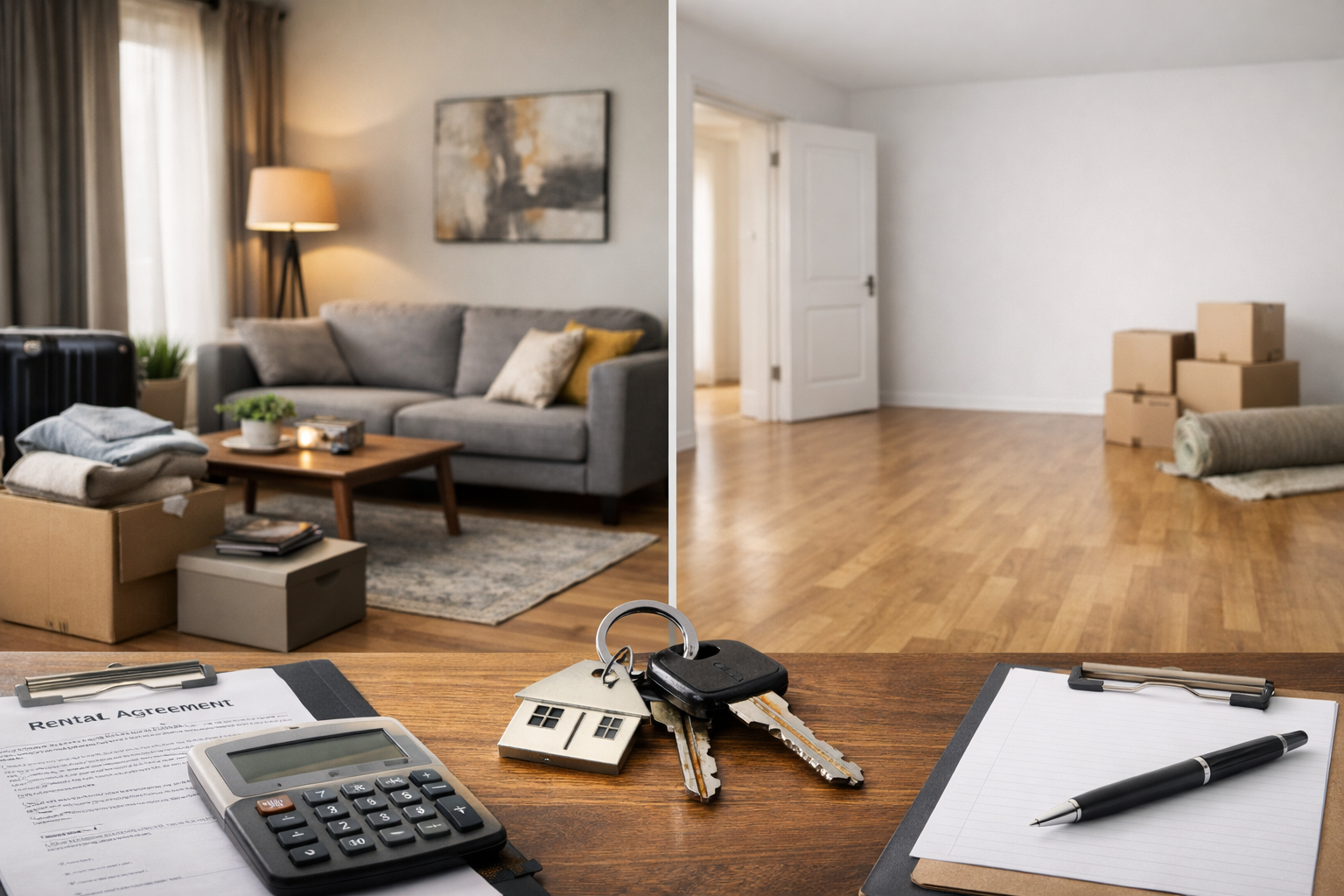
What actually makes sense for a landlord deciding between these options? Instead of overthinking the market, many landlords get clarity by answering a small set of questions.
Who is the ideal tenant for this property right now?
How long is that tenant realistically likely to stay?
How much involvement feels reasonable after the keys change hands?
Different answers lead to different choices. Some landlords choose furnished homes to accommodate shorter stays or to meet tenants' convenience needs. Others prefer unfurnished setups to suit longer tenancies and a more straightforward management style. Income expectations, tenant profile, and level of involvement all play a role in shaping the decision.
Many owners change their approach after one lease. A yearly review makes the picture clearer.
Conclusion
The decision between furnished and unfurnished depends on the property's positioning, the type of tenant it attracts, and the level of involvement you are comfortable managing over time. Both approaches can work when they align with the property’s location and the tenant's expectations. Clarity develops through experience. A single lease cycle can highlight patterns in tenant behaviour, maintenance needs, and vacancy periods. These insights make it easier to refine the setup and improve consistency over time.
Our real estate agents understand how different areas, unit types, and tenant profiles behave across Dubai and can help you position your property to attract the right renters from the start. A short conversation is sometimes enough to clarify whether furnishing makes sense for your goals or if keeping the property unfurnished will deliver better long-term results.